U.S.-Mexico Cooperation After El Mencho
Editor’s Note: The death of “El Mencho” appears to be a win for the Mexican government, both at home and in its relations with the United States. Daniel DePetris, a fellow at Defense Priorities, describes the progress Mexico has made in its war on cartels and assesses how the operation affects President Sheinbaum’s status at home and relations with the United States.
Daniel Byman
***
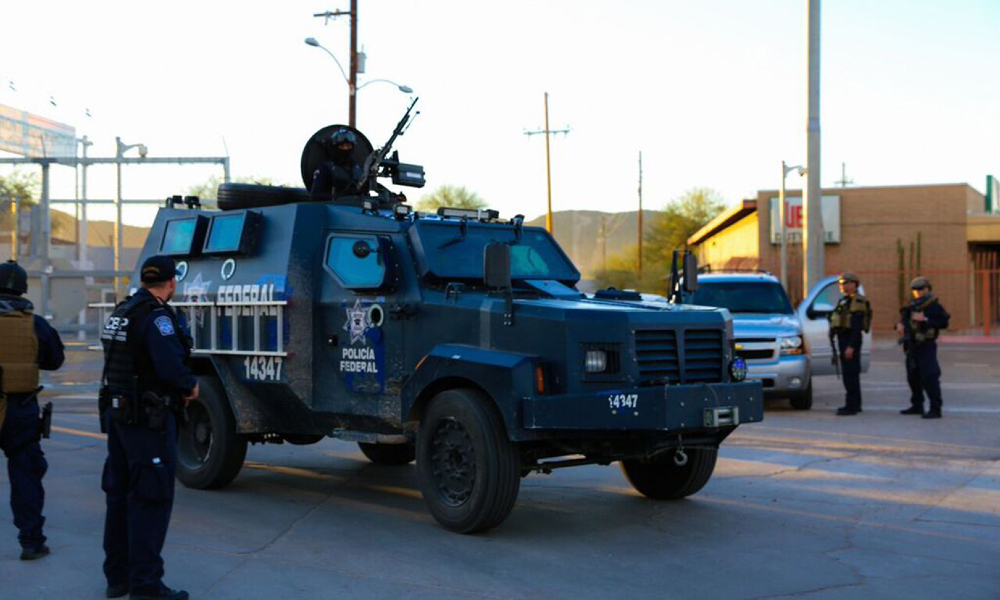
On Sunday, Feb. 22, elite Mexican special operations forces acting on intelligence handed over by the CIA tracked down one of Mexico’s biggest criminals: Nemesio “El Mencho” Oseguera Cervantes, the leader of the Jalisco New Generation Cartel (CJNG), Mexico’s most powerful criminal organization.
Oseguera’s killing was the Mexican government’s most significant tactical success since the 2016 rearrest of Joaquín “El Chapo” Guzmán Loera, who was later extradited to the United States, tried, and sentenced to life in prison. The operation is also a boon for Mexican President Claudia Sheinbaum’s security strategy, which focuses on the dual track of alleviating the socioeconomic factors that help drive cartel recruitment and strengthening coordination between the Mexican state’s various security services. Politically, Sheinbaum will earn some political cushion, however brief, with President Trump, who frequently presses the Sheinbaum administration to act even more aggressively against the country’s cartel networks. The White House commended the Mexican army for Oseguera’s takedown and noted, again, that Washington expects the pace of operations to accelerate in the future.
Despite an impressive mission against a high-value target, multiple questions hang in the balance. First, will Oseguera’s demise represent a turning point in Mexico’s two-decade-long war against the cartels, or will it be another instance in which a tactical success fails to lead to long-lasting changes in the country’s security situation? How much of a reprieve will Sheinbaum get from the Trump administration, which has proved notoriously impatient for headline-grabbing results? And how will U.S.-Mexico bilateral relations evolve over the remaining three years of Trump’s presidency? While certainly a successful operation, Osguera’s death risks sparking new violence within and among cartels, and Sheinbaum will remain under pressure—especially from Trump—to keep up the momentum.
A Limited Victory, but a Victory Nonetheless
Oseguera’s cartel, the CJNG, has acquired significant power and reach throughout Mexico since its establishment approximately 15 years ago. The organization quickly made a name for itself by employing ruthlessness and brutality against civilians and the Mexican state. Some of the most high-profile attacks in Mexico over the past decade were attributed to the CJNG. In April 2015, for instance, the cartel killed 15 Mexican police officers during an ambush in Jalisco. In June 2020, CJNG assassins attempted to kill Mexico City’s top security official and current security minister, Omar García Harfuch, in broad daylight in a high-traffic street in the Mexican capital. According to reports, the CJNG was also responsible for the assassination of Carlos Manzo in November 2025, a tough-on-crime mayor who called for a greater Mexican army presence in his city, Uruapan.
Oseguera’s death delivers a sense of justice to the thousands of Mexicans who have been terrorized by the CJNG, which has a presence that extends from its home base of Jalisco all the way to Chiapas, near the border with Guatemala. However, if Oseguera’s death was designed to degrade the CJNG into irrelevance, or at least undermine its ability to take on the Mexican state, then the immediate repercussions have been disappointing. Even before news of Oseguera’s killing was confirmed, the cartel flexed its muscle from coast-to-coast across 20 Mexican states, burning vehicles, setting up roadblocks on federal highways, destroying convenience stores, and getting into shootouts with Mexican troops deployed to restore order. The violence quickly spread from Guadalajara and Puerto Vallarta to the northeastern state of Tamaulipas, illustrating the extent of the cartel’s presence. Twenty-five Mexican soldiers were killed in the violence, and while the attacks and roadblocks have since subsided, videos of smoky skylines and airline passengers running in panic through the Guadalajara airport have nevertheless given off the perception that Sheinbaum’s administration cannot control its own country.
The perception of limited control is accurate, but Sheinbaum’s administration is making real progress. Her predecessor and mentor, Andrés Manuel López Obrador, presided over the most violent period in Mexico’s modern history, which included more than 200,000 homicides during his six-year tenure—a 25 percent increase from the previous six-year period. Sheinbaum has criticized the mentality associated with past Mexican presidents’ drug war efforts and reiterated her support for Obrador’s so-called “hugs, not bullets” strategy, but she has largely ditched her mentor’s approach in favor of a more confrontational one. In December 2025, the Mexican government claimed that during the first 14 months of Sheinbaum’s administration, 39,000 arrests were made, 20,000 guns were seized, and 1,760 drug labs were destroyed. Sheinbaum also insists that homicides have decreased by 40 percent from September 2024 to December 2025, although many analysts refute those numbers. Much of the Mexican army’s attention has been focused on Sinaloa, the traditional epicenter of narcotrafficking activity and one of the country’s deadliest states. Politically, Sheinbaum will attempt to leverage the latest operation in her quest to consolidate power over her party, Morena, a portion of which remains beholden to her predecessor, Obrador.
Pressured in part by the Trump administration’s constant threats of deploying the U.S. military to Mexican soil, Sheinbaum has also proved to be far more cooperative with Washington on the anti-drug file than Obrador ever was. Sheinbaum remains adamant that U.S. troops will under no circumstances be permitted to conduct unilateral offensive operations inside Mexico. But at the same time, she is strengthening and deepening the U.S.-Mexico intelligence relationship, which serves the interests of both countries. This has included the Mexican government consenting to the CIA expanding aerial surveillance over cartel-infested areas of Mexico, leading to greater information sharing between Washington and Mexico City. The Sheinbaum administration has also transferred more than 90 high-level drug traffickers, including Rafael Caro Quintero and Oseguera’s brother, to U.S. custody for prosecution. In addition, about 60 low- to mid-level politicians have been arrested for connections to narcotrafficking in what the Sheinbaum administration calls “Operation Swarm.” Ridding the CJNG of its top leader is another notch on Sheinbaum’s belt. Washington is no doubt taking notice.
As much as the U.S. and Mexican governments might be pleased about Oseguera’s killing, the long-term impact of the operation is still to be determined. When the Mexican government, in partnership with Washington, was able previously to find and neutralize a top drug lord, it discovered weeks or months later that the cartel landscape had become more complicated and violent as a result. Since Mexico declared a war against cartels nearly two decades ago, criminal organizations have fractured into smaller, even more lethal offshoots as the leadership of more established cartels are decapitated. In many cases, killing or arresting the boss sparks internal conflict within the targeted group as the balance of power changes and potential replacements exploit the power vacuum as an opportunity to grab more power for themselves. This internal conflict, in turn, can increase fatalities, draw in civilians, and strain the finite resources of the state.
The ongoing civil war within the Sinaloa cartel is a case in point. In July 2025, the co-founder of the cartel, Ismael “El Mayo” Zambada García, was abducted by Joaquín Guzmán López, one of El Chapo’s sons, and flown aboard a small plane to U.S. federal authorities in Texas. While the motives for the capture were unclear—one explanation is that Joaquín Guzmán was trying to help his brother, Ovidio Guzmán López, get a lesser sentence from U.S. prosecutors—the episode created an absence of authority at the top and ushered in a wave of retaliatory attacks against the so-called Chapitos wing of the Sinaloa cartel. The civil war between the Chapitos and El Mayo’s supporters turned Sinaloa’s capital, Culiacán, and its surrounding towns into a war zone. The homicide rate increased by 400 percent the following year, with thousands dead and the local economy suffering a significant contraction. The cartel infighting has continued since.
The CJNG could follow a similar pattern as the Sinaloa cartel and collapse into internal conflict. The transition to a new leader is unlikely to be fast, smooth, or painless. A traditional dynastic transition at the top is not possible; Oseguera’s brother, son, and brother-in-law, who would be considered the leading candidates to take over, are incarcerated in the U.S. on drug trafficking charges. Oseguera’s top lieutenants might fight it out among themselves for the throne, or they could seek to establish their own organizations separate from the CJNG. Either scenario will pose problems for the Mexican government as it tries to keep the security situation under control.
U.S.-Mexico Relations After El Mencho
The raid will keep Sheinbaum in Trump’s good graces at a time when the mercurial U.S. president remains intent on expanding U.S. power over the Western Hemisphere and bombing suspected drug boats in the Caribbean. Even so, preserving positive momentum between Sheinbaum and Trump will be a constant struggle. As other foreign leaders have learned over the past 13 months, Trump is a difficult man to please. While Trump officials like Ron Johnson, the U.S. ambassador to Mexico, were quick to congratulate the Mexican security forces for the Feb. 22 operation and boast how U.S.-Mexico security cooperation has risen to “unprecedented levels” under Sheinbaum’s administration, Trump was noticeably more critical. On Feb. 23, one day after Oseguera’s killing, Trump jumped on Truth Social and reiterated the same message he has been delivering since he entered office: “Mexico must step up their effort on Cartels and Drugs!” The next day, during the State of the Union address, Trump reminded the House chamber and the millions of Americans watching that, despite Oseguera’s death, large parts of Mexico remained under the cartels’ control.
The implication is clear: Mexico still has a lot of work to do against narcotrafficking organizations, and the United States expects the Mexican government to remain hypervigilant in combatting them. This includes not only authorizing similar military operations akin to this month’s raid against the CJNG leadership but also being more proactive in arresting Mexican politicians and officials who hold relationships with the cartels they’re supposed to be countering. In his meetings with Mexican officials, U.S. Secretary of State Marco Rubio has routinely requested the arrest and extradition of corrupt Mexican politicians, including those in Sheinbaum’s Morena party, to the United States for prosecution. Thus far, Sheinbaum has sought to thread the needle between upsetting Washington and engaging in a full-bore offensive against politicians suspected of corruption, particularly those who hold senior ranks, which could weaken Morena’s unity and instigate internal challenges to her authority. But this balancing act will become impossible to sustain if the Trump administration grows convinced that Sheinbaum is deferring anti-corruption initiatives for the sake of political expediency.
A Persistent Problem
On the surface, the killing of Mexico’s biggest drug lord is an accomplishment that will earn Sheinbaum’s administration good headlines and strengthen her argument that Mexico’s security forces have both the will and the capability to execute anti-cartel operations without direct U.S. intervention. Moreover, from a public relations perspective, the mission delivered a high-profile win for which Mexico and the United States could legitimately claim credit.
However, Mexico cannot kill its way out of this problem. As long as demand for illicit narcotics in the United States and Europe remains high and the drug trade remains profitable, criminal organizations—whether it be the CJNG, the Sinaloa cartel, or a smaller regional group—will find it in their interest to continue their activity regardless of who happens to be at the top.

-(1).jpg?sfvrsn=af0bd5fc_5)