Ukraine’s Energy Corruption Scandal Just Got Much Worse
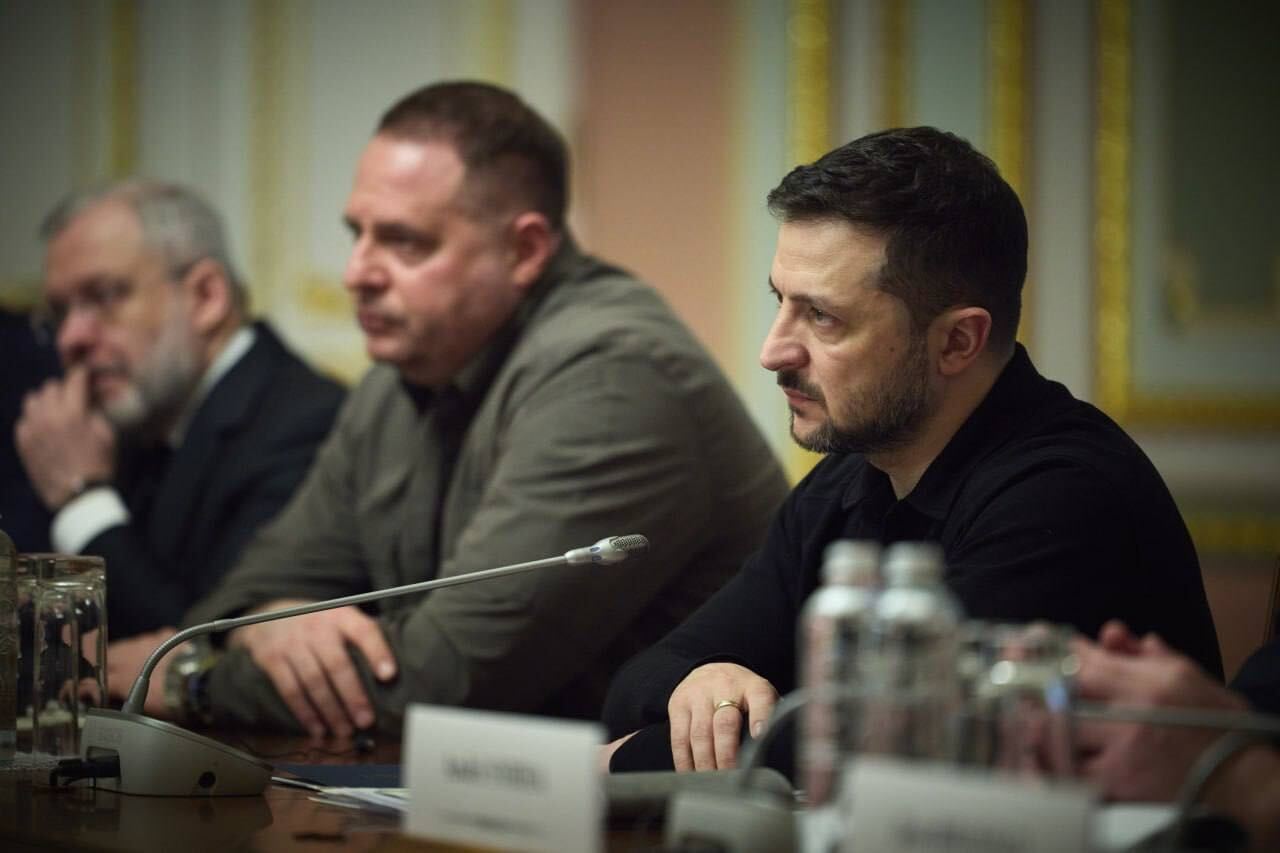

Don’t look now but the biggest corruption scandal in modern Ukrainian history is getting a whole lot worse. I wrote about this scandal—in which current and former Ukrainian officials, as well as the Ukrainian president’s close associates, allegedly exerted illegal influence over a strategic state-owned energy company to enrich themselves—last November. The scheme, revealed by the National Anti-Corruption Bureau of Ukraine, or NABU, led to the firing of two ministers and the president’s notorious chief of staff.
At the time, the scandal implicated a number of Volodymyr Zelensky’s close friends and associates, but it did not touch him personally.
All that changed two weeks ago, when Ukrainian media revealed previously undisclosed case files that potentially link Zelensky himself to the scheme and suggest that he may be getting a very nice house out of it.
The files in question are transcripts of the conversations that NABU recorded when it wiretapped the apartment of one of the scheme’s ringleaders, Tymur Mindich, a tycoon and longtime business associate of Zelensky. The bureau released small bits of those audiotapes to the public back in November, but many hundreds of hours of audio remained undisclosed.
This month, however, transcripts of some of those audiotapes were leaked to Ukrainska Pravda, a leading Ukrainian media outlet, as well as to Ukrainian opposition lawmakers, Oleksii Honcharenko and Yaroslav Zheleznyak. Both Ukrainska Pravda and Zheleznyak said they believed the files were part of the discovery material in the energy corruption case, and that they were leaked by either one of the many defendants in the energy corruption case or their lawyers.
The transcripts reveal loads of damning details about the Ukrainian government. One particular transcript mentions a certain “Vova,” which is a diminutive of Volodymyr, during a discussion about the construction of four luxury mansions in the suburbs of Kyiv.
Then, yesterday, another shoe dropped: NABU and its sister agency, the Specialized Anti-Corruption Prosecutor's Office, charged Zelensky’s former chief of staff, Andriy Yermak, with money laundering for that exact construction project, de-facto confirming the authenticity of leaked transcripts.
The questions hanging over Kyiv now are—who is this “Vova”? And if the “Vova” is Zelensky, can he be held accountable?

The Mindich Tapes
The more than 1,400 pages of leaked files reveal an astonishing number of damning details about how a group of Zelensky’s friends—Mindich and others—exerted influence over the country’s defense, banking, and other strategic sectors.
One conversation reveals potentially illegal machinations surrounding the nationalization of a large chemical plant and a bank. Another confirms Mindich’s previously reported ties to Fire Point, a well-known Ukrainian producer of drones and missiles with murky origins. In the transcripts, Mindich is complaining to Ukraine’s then-defense minister, Rustem Umerov, about a lack of government financing to Fire Point. They also discuss a deal to sell a part of the company with a $300 million cash-out to its beneficiaries, which presumably includes Mindich. Umerov now leads Ukraine’s delegation in peace talks with Moscow and Washington as the secretary of the National Security and Defence Council of Ukraine.
The most explosive part of the files, however, relates to the plausible direct involvement of Zelensky in corruption. While his full name isn’t mentioned anywhere on the tapes, the transcripts do mention several times someone named “Vova”—a diminutive of Volodymyr, which is what Zelensky goes by among friends and family.
The key Vova mention takes place in July 2025, during a conversation between Mindich and a woman named Nataliia, who appears to be working for Mindich. They discuss ongoing construction of the Dynasty cooperative—a plot of land in a luxurious Kyiv suburb, where four large houses have been under construction since before the full-scale invasion.
The cooperative was first discovered by a Ukrainian investigative outlet, Bihus Info, in the summer of 2025. The outlet found that the luxurious homes were being built by a company linked to Ukraine’s former Deputy Prime Minister Oleksiy Chernyshov. A close family friend of Zelensky, Chernyshov had been charged with abuse of power and bribery in a separate corruption case in 2025.
Subsequent media investigations alleged that the four houses were intended for Chernyshov, Mindich, Yermak, and Zelensky. The four men have been friends for many years: According to Ukrainska Pravda, First Lady Olena Zelenska and Yermak are godparents of Chernyshov’s daughter.
In the leaked transcripts, Mindich and Nataliia discuss needing to freeze the construction of Dynasty in light of ongoing investigations by NABU into their partner Chernyshov. The bureau pressed charges against him that same summer.
Mindich and Nataliia, whose job appears to be managing Dynasty’s construction, complain about temporarily pausing the project after all the work and money they’ve put into it. At one point, Mindich mentions one of the houses that belongs to “Andrii,” which appears to refer to Yermak.
Nataliia also mentions a fence that was built between Mindich’s house and a house that belongs to “Vova.” Further suggesting that Vova here is Zelensky, Mindich also separately says that he is expecting the arrival of “Max Donets”—a name that appears to refer to the head of Zelensky’s personal security. Maksym Donets has been one of the closest people to the president, in the most literal and physical sense, since Zelensky’s election in 2019.
Mindich doesn’t explain to Nataliia who Donets is or why he is coming over, nor does Nataliia question it, suggesting that both are familiar with the president’s personal bodyguard. It’s unclear if Donets’s visit is related to the construction project, the main point of discussion in which his name is invoked.
But whatever the motive for the visit, the fact that Zelensky’s bodyguard was having routine interactions with Mindich—who is now a sanctioned individual hiding in Israel after being charged with creating and leading a criminal organization, money laundering, and illegal influence on government officials—seems to have been part of usual business.
Yermak’s Charges
On May 11, two weeks after the transcripts were leaked, Yermak was charged with money laundering. According to NABU, the former chief of staff was part of a criminal group, along with Mindich and Chernyshov, that laundered illicit funds to build the Dynasty compound.
The anti-corruption bureau released a video explaining the scheme. Crucially, the video includes snippets of wiretapped conversations between Mindich and others that match the leaked transcripts perfectly, suggesting that the transcripts are authentic. NABU hasn’t explicitly commented on the transcripts since their leak.
According to the bureau, Chernyshov and Mindich began planning the Dynasty's construction in spring of 2020, shortly after Chernyshov had been appointed the minister of community and territorial development of Ukraine.
NABU says the compound’s plan included four private mansions, as well as a fifth building with a pool and spa facilities for joint use. The budget for the project was roughly $8.5 million, although the real costs must have been higher: In the leaked transcripts, Mindich’s associate Nataliia says she will need $1.3 million to pay for just one relatively small part of construction—electrical wiring.
The group funded the project with money obtained from illicit activities and came from “various sources,” according to NABU. One source, the bureau said, was the “corruption schemes at Energoatom,” the state-owned operator of Ukraine’s nuclear power plants. Mindich’s scheme that forced the contractors of Energoatom to pay kickbacks was the main finding of NABU’s original investigation, Operation Midas, unveiled back in November.
The total sum of money that the group laundered to finance Dynasty’s construction was more than 460 million hryvnia, or $10.5 million, according to NABU.
One part of NABU’s recent investigation is especially cynical: The group was intent on going through with the project even in the mere weeks before and after Russia’s full-scale invasion.
On Feb. 16, 2022, eight days before Russia’s full-scale invasion, Yermak was discussing plans for his mansion with a designer. As early as March 19, 2022, with Russian forces still occupying large swaths of territory northwest of Kyiv, including Bucha, Chernyshov was already pushing his contractors to restart construction.
On May 12, 2026, NABU said it pressed money laundering charges against six more individuals involved in the scheme, including Chernyshov.
Zelensky’s Implausible Deniability
For years, Zelensky enjoyed some plausible deniability when it came to the corruption of his circle.
There was a genuine debate about whether the president knew of the corruption committed by people he brought to power, people with whom he celebrated family holidays, or whether he was more of a trusting dupe. There was space for this debate because no investigation had ever placed Zelensky at the center of any scheme. While people around him were clearly profiting from their access to the president, there was never a hidden villa or some other unexplained wealth tied to Zelensky personally. This was an important caveat, and it allowed people to argue for and genuinely believe an “if only the tsar knew” type of narrative that absolved Zelensky.
The leaked transcripts, and NABU’s charges against three of his close associates—Mindich, Chernyshov, and Yermak—make believing in Zelensky’s naivete far more difficult.
And the president seems painfully aware of that fact, because in the two weeks since the transcripts surfaced, he has yet to deny his involvement, scapegoat some other “Vova,” question the transcripts’ authenticity, or say anything about them at all. The only official comment on the issue from the president’s office is that they don’t have one.
The corruption scandal that is slowly enveloping Zelensky raises many questions, the toughest among them being whether there is anything anyone can realistically do to hold Zelensky accountable any time soon.
Like many democratic leaders, Ukrainian presidents enjoy immunity while in office. The president is accountable to the people through the electoral process, and in normal times, the people might vote the president out of office if he or she abused their power.
The other option available in normal times would be impeachment. Theoretically, Ukraine’s parliament, the Verkhovna Rada, could impeach Zelensky for corruption, though this is a significantly more complicated process than in the U.S. and requires the approval of the Supreme Court and the Constitutional Court of Ukraine. The speaker of the parliament would then assume the duties of the president. The president, now a private citizen, would lose his immunity and thus come under the jurisdiction of NABU and other law enforcement agencies.
But the times in Ukraine are not normal.
Ukrainians cannot vote Zelensky out of office because, as I previously outlined in Lawfare, elections are much too unsafe, expensive, and politically dangerous to hold during active hostilities—not to mention that they are explicitly prohibited when the country is under martial law, as it is now. Impeachment is legal but politically impossible, not least because the parliament in its current form would never gather enough votes to go through with it.
And then there’s the fact that despite all the corruption scandals, Zelensky remains surprisingly popular. A fresh poll done just days before the transcripts emerged puts his approval rating at 58 percent—a rating any recent American president would envy.
Since 2022, the president has managed to keep his approval ratings steady at around 60 percent on average every year. Even Zelensky’s having a right-hand man like Yermak, who was mistrusted by more than 60 percent of the country, didn’t hurt the president’s ratings. Neither did the government’s attempt to dismantle the country’s anti-corruption bodies, which caused the first country-wide protests in Ukraine since 2022. Polls also show that the vast majority of the country does not support holding elections during wartime.
In other words, there is simply no appetite for the removal of Zelensky: not among the general public, not among the political elites, not among civil society. Even the recent revelations haven’t shaken the general consensus that attempting a change of leadership during war presents insurmountable risks.
Faced with a choice between tolerating corruption and provoking a leadership crisis during the war, Ukrainians are resigned to putting accountability on the back burner.
It looks like for now, Vova is going to get away with it.