Understanding Al-Shabaab’s Recruitment Pipeline
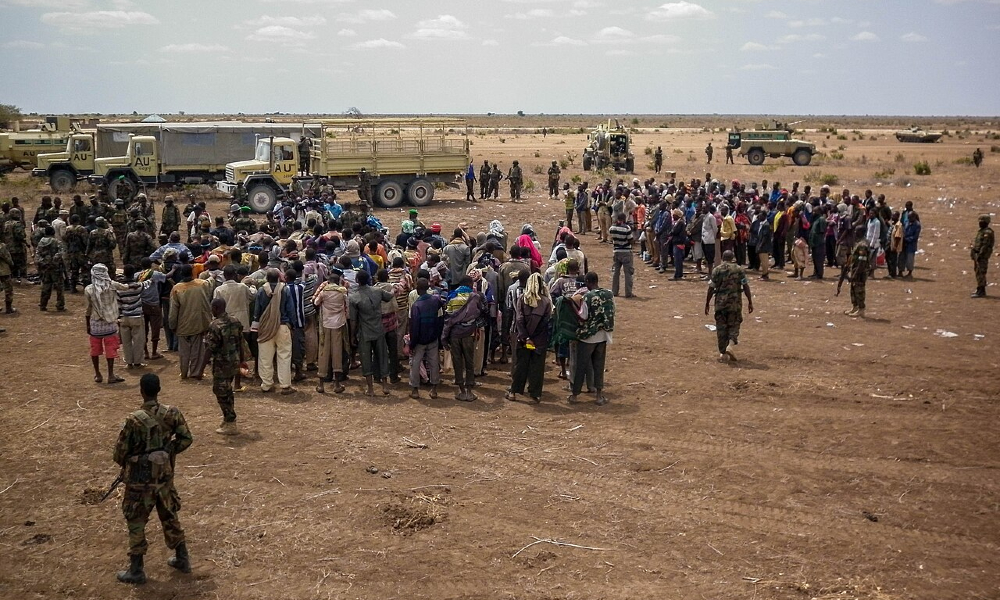
Editor’s Note: Even 25 years after 9/11, researchers still question what drives terrorist recruitment. This question is especially important for countering Al-Shabaab, one of the largest and most important jihadist groups today. Ismail Abukar of the Organization for Prisoners’ Rights argues that much of the recruitment in Somalia is driven by family connections and that programs to counter recruitment need to recognize and address these dynamics.
Daniel Byman
***
What leads individuals to join a militant group is a vital question that remains hotly debated. Al-Shabaab, al-Qaeda’s formal affiliate in East Africa, controls much of Somalia and has been able to generate a steady stream of recruits to replace its military losses from fighting against the U.S.-backed government and other rivals. Although analysts have dedicated considerable attention to Al-Shabaab’s ideology and the need for development in Somalia, the reality behind recruitment is more prosaic. In approximately 200 court cases I reviewed between 2019 and 2026, defendants captured during government operations against Al-Shabaab stated before a Somali judge that they joined the group because their father or uncle was already a member—because of family. The recruitment pipeline feeding Al-Shabaab is now largely self-reproducing, and it has been for at least a decade.
This finding has a direct policy implication. Every counter-recruitment and deradicalization program Somalia has run rests on the assumption that Al-Shabaab recruits through ideology, and that the appropriate response should be theological counter-messaging paired with economic incentives. If the dominant recruitment pathway is family membership rather than ideological conversion, these programs are not failing because of poor implementation. They are failing because they are built on the wrong premise.
Why Recruits Join Al-Shabaab
The prison interviews were not designed to study recruitment. My mandate was documenting prison conditions—food, bedding, medical care, treatment of detainees. Recruitment motivation data emerged incidentally because prisoners volunteered it. The consistency across 300 interviews in different facilities over seven years was not something I anticipated, but it became impossible to ignore.
Four pathways to membership in Al-Shabaab emerged. The majority, by a significant margin, was family membership: A father was in Al-Shabaab. An uncle recruited a nephew directly. A boy grew up in a household where membership was the normal condition of adult male life, and joining was not a decision so much as a continuation. The second pathway, which was far less important, was money: Al-Shabaab offered income in communities where no legitimate alternative existed. The third was authority: Membership conferred social standing and coercive power that civilian life categorically denied. The fourth was ideology: Some recruits said they were motivated by genuine Salafi-jihadist belief, but these were relatively few compared to the other motivations I encountered.
Court records corroborate this independently. Approximately 200 defendants stated before a Somali judge that they joined because of a parent or an uncle already in the organization. Two entirely separate evidentiary channels pointed to the same finding.
One methodological note is necessary. Prison populations in Somalia reflect who remains in custody, not who joins Al-Shabaab. Members of dominant clans have access to bribes, political leverage, and clan networks that secure release before formal imprisonment. Members of marginalized clans do not. This means the prison data likely undercounts dominant clan recruitment. So, in fact, the role of family recruitment documented among prisoners is more conservative than it appears, not less.
Three independent streams corroborate the pattern outside the prison context. The EUAA’s October 2025 Country Guidance confirms that Al-Shabaab recruits from specific marginalized subclans by exploiting subclan grievances. The Health and Fragility Group’s targeted recruitment study also found higher enlistment rates in marginalized subclans through a different methodology. And court records from the Kaaraan bus operation—a 2023 government interception of 11 girls transported from five regions simultaneously to Al-Shabaab fighters, with two named facilitators documented in proceedings—demonstrate that Al-Shabaab’s recruitment network draws from the same marginalized subclan communities identified in the prison data, with family and clan ties linking the facilitators to Al-Shabaab fighters across regions. These analyses provide further evidence of family recruitment that is not affected by the potential selection bias of who ends up in prison.
There is a generational dimension to this finding that goes to the heart of the policy argument. The generation that built Al-Shabaab’s original membership—men from structurally excluded communities who joined in the late 2000s and early 2010s—joined for three reasons that operated simultaneously. These included money and authority, motivations that I encountered in my conversations with prisoners. A third motivation was revenge: The man who killed your father during the warlord era is now a general in the Somali National Army; the commander who burned your family’s farm in Lower Shabelle is now a parliamentarian; the militiaman who drove your community off its land is now drawing a government salary. Al-Shabaab’s recruiters would name these men to potential recruits, identify their current government positions, and offer a theological mandate to act on an injury the state had institutionalized rather than addressed.
The prison population I documented was not a cross-section of Somali society. It was heavily skewed toward specific marginalized communities: the Jareer, Gaboye, and Somali Bantu minority groups, and specific marginalized subclans within every major clan family—the Gaaljecel within Hawiye, the Biyomaal (Bimal) within Dir, the Awrtable within Daarood, the Eelaay within Digil-Mirifle. The EUAA confirms that Al-Shabaab exploits grievances against dominant lineages to recruit from precisely these communities across multiple regions.
These communities share a history the Somali state has never addressed. Human Rights Watch documented that the 1991-1992 famine “claimed as many as 300,000 lives by mid-1992,” concentrated in Rahanweyn territory. The warlords responsible were not prosecuted. Somalia absorbed them first into the Transitional Federal Government and after 2012 into the Federal Government of Somalia. They hold government positions today. They were not held accountable, and their victims’ families received no compensation. Al-Shabaab’s recruiters know this history and use it with precision.
The children of that initial generation are joining for a different reason: family membership. His father was Al-Shabaab and there was no other world to grow up in. While the motivation to join Al-Shabaab has changed across generations, Al-Shabaab’s pipeline of recruits did not. The communities are the same, but the mechanism has shifted—reinforced by subclan identity and familial legacy of membership that is now being passed to a new generation. This distinction matters because it changes what intervention is required. Economic development would address the first generation’s pathway, but it does not address a boy who joins because his father was already a member.
What this means operationally is that Al-Shabaab no longer needs to actively recruit from marginalized communities in the way it once did. Families of members already do the recruitment work. The group has achieved something that counterterrorism analysts rarely model: a self-reproducing membership pipeline that operates largely without active organizational effort.
Correcting the Policy Response
Somalia’s counter-recruitment programs, and the international funding behind them, proceed from the assumption that the right intervention is theological counter-messaging combined with economic alternatives. The U.K. Foreign, Commonwealth and Development Office’s Somalia Counter Extremism Programme—designed to “incentivise defections from Al-Shabaab by providing alternative paths and viable rehabilitation options”—is representative of how international partners have framed the problem. In practice, this means offering religious counter-messaging to challenge Al-Shabaab’s theology alongside livelihood programs to provide economic alternatives. For the small proportion of recruits whose primary motivation is ideology, this approach has some logic. For the majority whose primary motivation is family membership, it addresses nothing.
A child whose father is Al-Shabaab does not need to be persuaded of a different theology. He needs a different family structure. Human Rights Watch’s 2018 investigation into detained boys found they described feeling trapped by both the armed group and the state, with nowhere safe they could go. Detention removes a child from Al-Shabaab but returns him to the household that produced the recruitment. The intervention is circular. Effective rehabilitation requires two specific changes: First, programs must provide genuine safe alternatives to the household—mentorship structures, alternative authority figures, and economic pathways that do not depend on the Al-Shabaab family network. Second, for child recruits, programs must explicitly protect minors from family coercion in a manner consistent with Somalia’s obligations under international law.
The necessary interventions follow directly from the diagnosis. Subclan-sensitive political reform is essential. The 4.5 formula—Somalia’s power-sharing system that allocates political representation across four major clan families plus a minority coalition—structurally excludes the specific marginalized subclans Al-Shabaab recruits from most effectively. Rehabilitation programs paired with political exclusion are fighting the problem with one hand while the other hand feeds it. Accountability for warlord-era violence also remains relevant—not as a direct recruitment argument for the second generation, but because a child raised in a household where Al-Shabaab membership began with a father’s legitimate grievance against men now in government absorbs that grievance as his own context. As long as those men hold government positions and the state has offered no accounting, Al-Shabaab’s legitimacy argument retains purchase even in families where the original motivation has shifted from revenge to inheritance.
In a recent Lawfare article, Tricia Bacon concluded that Somalia’s real test is whether its political rivals can reconcile. The data I have documented suggests the test is more difficult. It is also whether the state can offer something to the communities Al-Shabaab has recruited from since 2006 that is more credible than what the group offers—beginning with an honest accounting of what was done to them, and who is now drawing a government salary because of it.
Al-Shabaab no longer needs to persuade anyone. It just needs the families it has already built to keep doing what families do.
Correction: A previous version inaccurately described the length of time Al-Shabaab has engaged in these recruitment strategies. It has since been corrected.