What Can Be Done About Iran’s Closure of Hormuz?
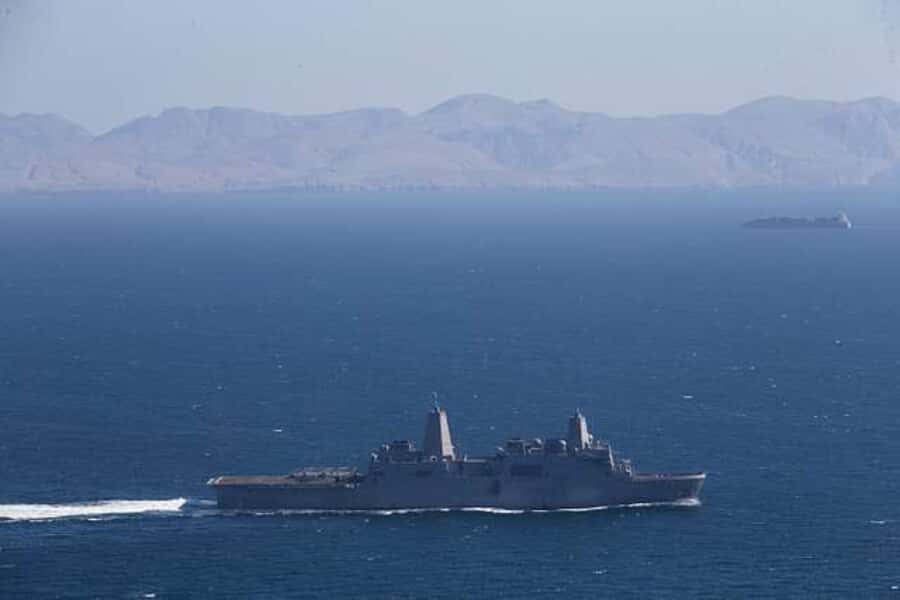

On June 25, Iran attacked a merchant ship passing through Oman’s waters in the Strait of Hormuz. The attack happened after the U.S. and Iran had reached a memorandum of understanding (MoU) that was supposed to end the war.
In a previous article, I predicted that the MoU’s vague terms about Hormuz would inevitably lead to the next crisis. Indeed, the Iranian attack caused a U.S. military response and reignited the conflict, expanding to the Gulf states and Jordan, though at a lower intensity than before. The U.S. resumed the naval blockade on Iranian ports that was lifted after the signing of the MoU and declared plans to tighten economic pressure in Iran.
Meanwhile, the 60 days the MoU allocated for the U.S. and Iran to reach a final deal on the nuclear issue and others have passed. On July 8, President Trump said that the MoU “is over.”
Iran continues to impede passage through Hormuz and intends to collect “service fees” from vessels passing in the Strait as a source of national income. This piece will explore how states may use international law tools to pressure Iran to stop hindering free passage through the Strait of Hormuz, as guaranteed under international law.
Where Do Things Stand Now in Hormuz?
There are conflicting accounts of the situation in the Strait of Hormuz, one of the world’s most important waterways, through which one-fifth of global oil and liquefied natural gas flowed before the war. On the one hand, the U.S. military claims that it has cleared mines, established a protected corridor, and moved substantial volumes of oil through the strait. On the other hand, Reuters estimates that only two-thirds of prewar volumes of oil get out, and these amounts rely on military protection, dark crossings (vessels turning off identification system transponders), specified time windows, and continuing exposure to projectile and drone attacks.
Two recent developments might signal a response to Iran’s loss of some grip over traffic through Hormuz: first, an attack on Saudi Arabia’s East-West pipeline, circumventing the strait, by Iraqi militias, some of which are supported by Iran; and second, the success of the Houthis, Iran’s proxy in Yemen, in gaining control near the Bab al-Mandab Strait, another possible choke point for oil exports from the Gulf to Europe.
It is clear that, whatever the exact number of commercial vessels passing through Hormuz, the situation is not stable, and the problem is not yet solved.
The Future of Traffic Through Hormuz
The only part of the MoU that appears still alive is the dialogue between Iran and Oman on the “future administration and maritime services in the Strait of Hormuz.” However, official statements and media reports seem to reveal different attitudes of the littoral states of the strait about what international law allows.
For its part, the Foreign Ministry of Oman affirms that it
continues its transparent and neutral cooperation with all parties to restore freedom of navigation in the Strait, in full compliance with international law. Oman remains fully committed to its obligations as a State Party to the United Nations Convention on the Law of the Sea (UNCLOS) and calls on all parties to respect and abide by international law.
As elaborated in my previous piece, UNCLOS applies to international straits, such as Hormuz, under a regime of transit passage, a broad right of navigation and overflight which states bordering the strait may not suspend, even on security grounds. UNCLOS also prohibits tolls for passage. Charges may be levied only for specific services rendered to a ship.
At the same time, Iran is reportedly seeking fees of between 5 and 7 percent of cargo prices from ships navigating the strait and the ability to interdict any inbound traffic to the Persian Gulf that will be directed to a route in Iran’s territorial waters. Requiring “clearance” for merchant ship passage conflicts not just with the UNCLOS’s transit passage guarantee but also with the more limited innocent passage that Iran claims applies in the strait. Innocent passage is a regime for navigation in the territorial sea, allowing continuous and expeditious passage.
While a coastal state has more authority to regulate innocent passage, it is forbidden to impose requirements on foreign ships that have the practical effect of denying or impairing the right of innocent passage. Even before the UNCLOS, customary international law prohibited all states from imposing tolls for passage in international straits, which I explained in my previous article. Several leading shipping organizations recently reiterated this in a joint open letter to UN Secretary-General António Guterres and International Maritime Organization (IMO) Secretary-General Arsenio Dominguez. The letter stated that
introducing compulsory charges for transit, or service fees that are a toll in all but name, through the Strait of Hormuz would represent a significant departure from established international practice. Beyond the immediate financial implications for global trade, it would establish a precedent that could undermine the internationally recognised legal framework governing straits used for international navigation and transit passage. Once such a precedent is established, it becomes increasingly difficult to resist similar measures elsewhere, creating uncertainty for international shipping and global commerce.
Can Iran counter the view that the “service fees” it intends to collect are an illegal “toll in all but name”? Iran might try to base its pecuniary demands on Article 43 of UNCLOS, which stipulates that
User States and States bordering a strait should by agreement cooperate: (a) in the establishment and maintenance in a strait of necessary navigational and safety aids or other improvements in aid of international navigation; and (b) for the prevention, reduction and control of pollution from ships.
This article’s rationale is that littoral states should not carry the costs alone of ensuring safe and environmentally friendly passage in a strait used by vessels from many other states. However, the key words here are “cooperation” and “agreement.” The best example of how this should be implemented is the arrangement in the straits of Malacca and Singapore.
Critical aids to navigation are financed through the Aids to Navigation Fund (ANF), established as part of the IMO-supported Cooperative Mechanism. The fund is based on voluntary contributions from user states, such as Japan, South Korea, the United Arab Emirates, and other stakeholders. But the fund is not a toll imposed on transiting vessels as a condition for passage. Contributions to the ANF are used for navigation aids only and are not a general source of income for the littoral states. If anything, the Malacca model shows that Article 43 cooperation supports something very different from what Iran envisions. Article 43 is a burden-sharing provision, not a section that empowers Iran to coerce payments on vessels.
If Iran attempted to enforce such passage tolls, the shipping industry may find itself between Scylla and Charybdis: between Iranian demands for payment backed by a demonstrated willingness to attack civilian ships with live ammunition on the one hand, and U.S. sanctions on entities making such payments and loss of insurance coverage if such payments are made, on the other hand.
If the problems with alleged Iranian plans for the strait aren't enough, a senior Iranian security official made clear that, notwithstanding any arrangement reached with Oman on the management of the strait, the Strait of Hormuz will remain closed until Iran’s demands of the U.S. are met, including the release of frozen Iranian assets and an end to other regional conflicts.
What Can Be Done?
Let’s assume the Strait of Hormuz will essentially stay closed, or that it may open on the condition of Iran’s illegal demands for “service” tolls. What can be done about it?
First, the option of using military force to open the strait or coerce Iran to stop interfering with free passage seems less attractive, not necessarily for legal reasons, but for practical considerations.
Iranian attacks on commercial vessels not only are unlawful under the laws of armed conflict but also may amount to an “armed attack” against the flag states of the vessels within the meaning of Article 51 of the UN Charter, if the attack’s “scale and effects” are sufficiently grave.
An armed attack triggers the right of the victim state to use military force in self-defense. Furthermore, the victim state may receive help from other states under the notion of collective self-defense enshrined in the UN Charter. The UN Security Council in Resolution 2817 (2026) acknowledged “the right of Member States, in accordance with international law, to defend their vessels from attacks and provocations, including those that undermine navigational rights and freedoms.”
Realistically, however, the chance of a military operation’s success is slim. With today’s technology, Iran does not need a powerful navy to block a relatively narrow waterway. As long as Iran can, from time to time, hit oil tankers trying to pass through the strait with exploding suicide drones or small unmanned speed boats, commercial shipping will be deterred. U.S. naval superiority cannot guarantee free passage forever.
However, other options to counter illegal action exist under international law and may be more effective in this case.
One possibility is for the UN Security Council to act. In Resolution 2817, the council condemned Iran for obstructing passage through the Strait of Hormuz and then affirmed “that any attempt to impede lawful transit passage or freedom of navigation in these international waterways constitutes a serious threat to international peace and security.” The council’s determination is a prerequisite for applying powers under Chapter VII of the UN Charter. These powers include nonforcible measures, such as economic sanctions and embargoes.
The advantage of a UN Security Council decision is its binding force on all UN member states. The disadvantage is the need to secure a majority in the council and ensure that a permanent member (including China and Russia, in this case) will not use its veto power to block the decision.
Other measures, however, do not require international consensus. Iran’s hindering of passage through the strait breaches an international obligation owed erga omnes (toward all), as all states have a right to free passage. Each state injured by this breach has a right to take countermeasures against Iran. Countermeasures, as explained in the Draft Articles on the Responsibility of States for Internationally Wrongful Acts, are a temporary nonperformance of an international obligation by the injured state toward the responsible state—Iran in this case. The purpose of countermeasures is not retaliation or revenge but, rather, to induce the wrongdoing state to comply with its obligations.
Therefore, the injured state should first call upon the breaching state to fulfill its obligations and notify it of the injured state’s decision to take countermeasures if the situation is not rectified. Furthermore, the countermeasures should stop if the breach ceases. Certain countermeasures are prohibited (such as the threat or use of force or suspending obligations of humanitarian character prohibiting reprisals). Additionally, countermeasures must be proportional to the injury suffered.
A state whose vessels were attacked, denied transit passage, or forced to pay unlawful charges clearly qualifies as an injured state. A state that can show concrete and distinguishable economic injury caused by Iran’s obstruction of Hormuz—beyond generalized market effects suffered by all states—may also qualify as specially affected under the commentary to Article 42 of the International Law Commission Articles on State Responsibility. Other states may invoke Iran’s responsibility in the collective interest, but their entitlement to take countermeasures remains more controversial.
What might an effective countermeasure against Iran’s blocking of Hormuz look like?
One idea would be to make it clear to Iranian leadership that Iran, too, depends on the legal regime of free passage through international straits.
The straits of Malacca and Singapore are an even more critical choke point for global maritime commerce. The share of global seaborne trade passing through the straits is more than twice the Strait of Hormuz’s share (23.7 percent and 11.1 percent, respectively, in 2023 according to a UNCTAD review). What is even more important for the purpose of an effective countermeasure against Iran is that Iran’s oil export to China, which in 2025 purchased more than 80 percent of Iran’s shipped oil, passes through the straits of Malacca and Singapore.
The cleanest form of a straits-related countermeasure would be one directed at Iranian-flagged vessels, temporarily suspending their free passage through the straits of Malacca and Singapore or imposing an equivalent charge until Iran stops hindering lawful passage through the Strait of Hormuz.
All three littoral states of the Strait of Malacca—Malaysia, Indonesia, and Singapore—have a valid claim to be directly or specially injured by Iran’s actions in the Strait of Hormuz, entitling them to apply countermeasures against Iran. A Singapore-flagged ship was attacked by Iran while passing the Strait of Hormuz in Omani waters. Seven Malaysia-linked vessels were stranded in the Persian Gulf until Iran agreed to give them “clearance” to leave through Hormuz. Indonesia, likewise, had two oil tankers managed by state energy firm Pertamina stranded since March in the Persian Gulf until they escaped in July. More generally, these three states, as well as other East and Southeast Asian states, may also be especially affected by Iran’s interference in the Strait of Hormuz, given their critical dependence on oil passage through the strait than states in other parts of the world.
A legal right to take countermeasures is one thing; political will to do so is a different situation. So far, these states’ reactions to the crisis have differed: While Malaysia and Indonesia negotiated with Iran to secure free passage of their vessels through Hormuz, Singapore’s foreign minister stated that Singapore, as a matter of principle and international law, would not negotiate safe passage or payments for passage in Hormuz with Iran and would uphold the right of transit passage in international straits, applying also in the straits of Malacca and Singapore.
As the foreign minister emphasized, it is not a matter of taking sides in the war, and indeed, the suggested direct and proportional countermeasures against Iran could not be considered a belligerent act. Proceeds from such a charge on Iranian vessels as a countermeasure may be used to compensate vessel owners forced to pay Iran for passage through the Strait of Hormuz. Hopefully, Iranian leadership would understand that the closure of Hormuz is a double-edged sword and cease this practice.
However, countermeasures targeting Iranian vessels may be ineffective, given Iran’s long experience in bypassing international sanctions and blurring the origin of its exports. Due to previous U.S. sanctions, Iranian oil exports to China were typically labeled as originating from Malaysia and Indonesia, and Iranian cargoes might be carried under third-state-flagged vessels. Measures directed at such cargoes would raise additional legal difficulties because they cannot interfere with the flag state’s transit-passage rights. It is easier to do what Iran does—blocking any passage in a strait or contemplating demanding payments from every vessel—than to apply an effective system to identify and charge Iranian cargo only, without violating the rights of other states’ vessels.
One possible alternative would be measures taken at ports targeting Iranian cargo, such as seizure or charges, rather than interference with transit passage itself.
However, there is another practical problem here, too, due to the tactic of avoiding ports through ship-to-ship (STS) transfers of Iranian oil outside territorial waters. These transfers often involve “shadow fleet” vessels, obscuring registration and turning off their location identification systems. Reports indicate that these transfers occur near Malaysia, in its Exclusive Economic Zone (EEZ), bordering Indonesia’s waters. Malaysian authorities explain their limited enforcement by “jurisdictional gaps,” while lacking international intelligence-sharing and a budget for maritime enforcement. Indonesia’s foreign ministry also declared that “Indonesia does not permit its territory or maritime zones to be used for unlawful activities.”
While legal challenges to enforcement exist, they are not insurmountable. STS transfers are not per se illegal under international law. The transfers, however, have safety and pollution concerns that require transparency and certain procedures toward the coastal state. A 2023 IMO resolution advises coastal states to monitor STS transfers not just in their territorial waters but also in their EEZ. The resolution also encourages these coastal states to act in cases of noncompliance with safety and prevention of pollution regulations. In this case, Malaysia and Indonesia’s decision to cooperate to prevent Iranian oil STS transfers in their waters is permissible under international maritime law. The action would not even have to be made as a countermeasure under international law of state responsibility. All that is needed is political will and redefined priorities.
Finally, it should be emphasized that countermeasures are not limited to the same field as the wrongful act. If, for political reasons or efficiency shortcomings, strait-related or general maritime countermeasures are not feasible, countermeasures in other fields, for instance, civil aviation or satellite communication, can also be considered.
China’s Ambiguous Position
A keen-eyed reader may rightfully ask: What about China? Given that China imports more than 80 percent of Iranian oil, doesn’t it have the best leverage to persuade Iran to stop blocking Hormuz and abandon plans to collect passage tolls? Why spend efforts intercepting Iranian oil en route when sanctions at the destination may be simpler and more effective? What is China’s position on the matter?
China has at times invoked transit-passage language when useful to its own navigation interests. For instance, when asked about a Japanese protest claiming that a Chinese naval ship entered Japan’s territorial waters, a spokesperson for China’s foreign ministry replied that “[p]ursuant to relevant UNCLOS articles, the Tokara Strait can be used for international navigation, and by sailing through the strait, the Chinese vessel was exercising its right of transit passage, which is fully lawful and legitimate.”
In the Strait of Hormuz context, China’s declarations seem to support freedom of navigation. When China’s foreign ministry spokesperson was asked in April about China’s position toward Iran’s plan to collect shipping fees from each vessel passing through the Strait of Hormuz, she answered that the strait “is an important international trade route for goods and energy” and emphasized that “ensuring unimpeded passage serves the common interest of the international community.”
In another press conference, a month later, when referring to an attack near the entrance of the Strait of Hormuz on a Chinese-owned refined oil tanker, operated by a Chinese crew (under a Marshall Islands flag), the same spokesperson said that the Strait of Hormuz “is a strait for international navigation” and, after raising concerns about the vessels and crews stranded in the strait, reiterated that “it is in the common interest of regional countries and the international community to resume unimpeded passage through the strait as soon as possible.”
An official Chinese report on a phone call between Chinese and Iranian foreign ministers quoted the Chinese minister saying that, along with Iran's rights, “the freedom and security of navigation in the internationally accessible strait should also be guaranteed.”
Furthermore, China didn’t veto UN Security Council Resolution 2817, which recognized “lawful transit passage or freedom of navigation” through the Strait of Hormuz and determined that an attempt to impede this right “constitutes a serious threat to international peace and security.”
However, China, with Russia, did veto a later draft resolution, submitted by Bahrain alongside other Arab states. This draft proposed adding to the previous resolution a paragraph strongly encouraging interested states to coordinate defensive measures ensuring the safety and security of navigation across the Strait of Hormuz, including the escort of merchant vessels. China explained its vote by stating that “[t]he fundamental solution to ensuring safe passage of ships through the Strait of Hormuz is to achieve cessation of hostilities" and criticizing the draft as ignoring "the root causes of this conflict,” which are, according to China, “illegal military actions taken by the U.S. and Israel against Iran.” China also raised the concern that allowing the use of armed escorts might be misinterpreted and abused, citing lessons the Security Council should learn from the case of Libya.
While the last concern about military force can be understood as part of a consistent Chinese stand, the linkage the Chinese government makes between the existence of hostilities, the legality of the war against Iran, and Iran’s closure of the Strait of Hormuz is harder to understand as a valid legal position. The core purpose of the law of neutrality is to limit belligerents' actions that may harm neutral shipping. As already mentioned, the right to transit passage may not be suspended for security reasons. Even if the war were unjustified, it does not give Iran a right to violate international law toward neutral states by obstructing their right to transit passage through Hormuz.
Be that as it may, it seems that China signals that it would not go beyond lip service to uphold free passage through the Strait of Hormuz. That raises the importance of finding other countermeasures to induce Iran to stop choking this critical waterway, as suggested above.
* * *
In these times, which are not the best of times for international law, an effective use of nonforcible means to uphold the freedom of navigation, not by major powers but by “ordinary” states in the global south, especially injured by Iranian violation of this principle, can be a symbolic sign of hope.
The inability to reopen the Strait of Hormuz by force does not mean that the world must acquiesce to Iranian extortion.