
The New Arctic

The Arctic has become a hot topic in geopolitics, and thus a more frequent subject for commentators on international relations. Mia Bennett and Klaus Dodds’ new book has the merit of showing that Arctic geopolitical and ecological processes are intertwined and thus can’t be understood in isolation from each other. The authors “look both forward and backward,” which allows them to link the present and the past and give readers a better understanding of the development of regional dynamics since the late 2000s. Using this methodology allows them to “contextualize the [region’s] current [geopolitical and ecological] volatility.”
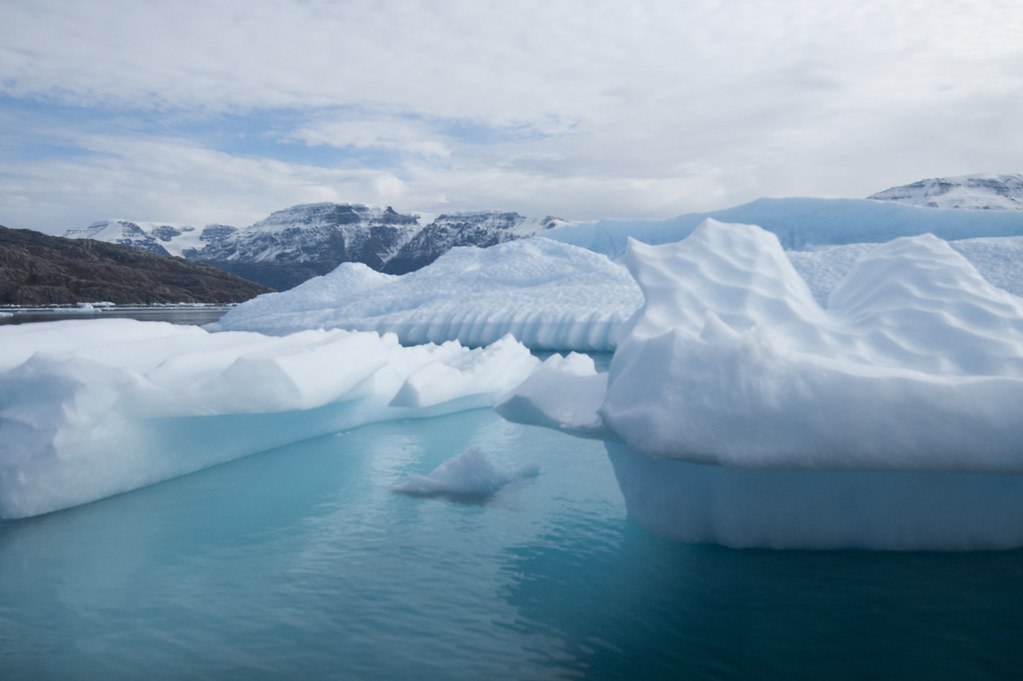
The book’s title cleverly reflects the authors’ insistence that ecology and politics must be considered together. Literally, “Unfrozen” refers to the Arctic’s ice melting due to climate change and thus to the book’s ecological perspective. Figuratively, it refers to the fact that old enmities over the region have been unlocked. In this geopolitical sense, Arctic melting has prompted new “struggles by and between different groups of people for power over resources, space and territory and the influence of those features on their power.” These two meanings are therefore closely linked, since ice melting not only affects the Arctic ecosystem but also has inevitable geopolitical consequences. Bennett and Dodds make their case in ten overlapping chapters, which offer a complete and consistent overview of the history of the Arctic and of how it has changed ecologically and geopolitically since ancient times through the most important events that have characterized and still characterize the region.
The authors explain that while the Arctic climate has changed throughout time, the recent warming has made the Arctic unrecognizable not only to scientists that have studied it for decades, but also to people who have inhabited it for millennia. In fact, environment and people are directly and deeply affected by global warming, which often causes ecological disasters, such as tundra wildfires, and which is transforming the Arctic into a new ocean in many respects. For instance, it is probable that in the near future the ice that currently covers many areas will melt, leaving vast bodies of water. This shift will have geopolitical and legal implications, as the authors explain. An excellent example they provide concerns Art. 234 of the United Nations Convention on the Law of the Sea (UNCLOS), which grants coastal states special privileges to regulate marine pollution in ‘ice-covered areas’ of their Exclusive Economic Zone (EEZ). The authors wonder how Art. 234 should be interpreted if ice covers those areas for just a limited period of time or only occasionally. This example illustrates how climate change “alters the geophysical foundations of the global ruled-based system” (p. 30).
The interconnection between ecological changes and geopolitics is also clear when it comes to the sequence of events that has led the eight regional states (Canada, Denmark/Greenland, Iceland, Norway, Finland, Russia, Sweden, and the United States) to establish solid cooperative links. The authors argue persuasively that the increased interest in the protection of the Arctic environment and the relaxation of the East-West tensions starting in the late 1980s encouraged these countries to cooperate. This led to the establishment of the Arctic Environmental Protection Strategy in 1991, which in 1996 was absorbed by the Arctic Council, the most important intergovernmental forum guiding cooperation in the region. Since 2011 the Arctic Council states have signed legally binding agreements on search and rescue, oil spill response, and scientific cooperation. Also, starting in 1998 the Arctic Council began expanding by admitting observers, namely states and actors that are interested in being involved in Arctic affairs such as nearby European states and Asian states. The authors highlight that the Arctic states established contacts with East Asia through trading networks across the North Pacific long before they established comparable links with European countries.
The interest of extraterritorial actors in the region’s governance is part of the reason the Arctic is now experiencing a rebranding as the “Global Arctic.” Apart from its geopolitical meaning, the term “Global Arctic” has an ecological meaning as it indicates that shrinking sea ice and glaciers, thawing permafrost, and higher temperatures affect the whole planet.
Nevertheless, geopolitical ruptures (e.g., Russia’s illegal annexation of Crimea in 2014 and Russia’s full-scale invasion of Ukraine in 2022) have reduced the interest of the Arctic Council states in continuing to expand the Arctic stakeholders’ community. While cooperation continued following Russia’s illegal annexation of Crimea, Russia’s full-scale invasion of Ukraine has brought cooperation to a halt. These events have thus disillusioned hopes for Arctic “exceptionalism,” the idea that the region’s distinctiveness--its sublime landscapes, harsh climate, and limited infrastructure--would lead states to cooperate. As the authors correctly argue, “nearly three decades of faith in Arctic exceptionalism produced material and symbolic benefits. Cooperation in areas such as science, environmental protection, and search and rescue has contributed to knowledge production and safety in the region” (p. 162). Whether that cooperation can be sustained now lies in doubt.
In this context, the authors contend persuasively that pan-Arctic cooperation is most likely when Russia, the largest state with the longest coast in the region, is weak, as was true after the collapse of the Soviet Union in the 1990s. They argue that “since the early 2000s, Russia’s resurgence has been undermining Arctic cooperation” (p.145). Since Vladimir Putin came to power in 2000, he has directed heavy Russian investments in Arctic oil, gas, and mineral resources in order to prop up Russia’s great power status. The ice melting that has offered opportunities for this enhanced exploitation has had negative consequences for the people and the environment of the region.
In this regard, the militarization of the Arctic territories plays a role. That process began in response to the growing accessibility of natural resources caused by ice melting and has recently increased because of the worsening of East-West relations. Thus, militarization is clearly linked not only to protection of state territory but also to more aggressive assertions of sovereign rights, whose importance has grown in the altered geopolitical context. This is evident from the priorities identified in the most recent Arctic policies of the eight regional states, which emphasize national security and territorial integrity. As Bennett and Dodd explain, this increased militarization risks the sidelining of the Arctic Council, with focus on soft security issues such as environmental protection.
Sovereignty, combined with proximity to the opening Arctic Ocean, has become a deeply divisive element in the region. The increasing accessibility of natural resources has pushed the coastal states (also called “the Arctic 5” – Canada, Denmark, Norway, Russia, and the United States) to assert their dominance on their territories through the 2008 Ilulissat Declaration, thus trying to counterbalance the increasing regional and global interest in governance and resource exploitation. The Declaration even excluded the other three Arctic states, namely Finland, Iceland, and Sweden.
Another consequence of the opening Arctic Ocean is that it has pushed the eight Arctic states to cooperate more extensively with states and actors outside the region in order to advance their Arctic interests. The International Agreement to Prevent Unregulated Fishing in the High Seas of the Central Arctic Ocean (CAOFA), which was signed by the eight Arctic states plus China, the EU, Japan, and South Korea and entered into force in 2021, exemplifies this trend. Since fish constitute an important global commodity, the regulation of the fisheries sector is of utmost importance, especially given that climate change may shift the distribution of fish stocks in ways that may create tensions between states, such as we have already seen between Russia and Norway in the Svalbard area.
However, geopolitical ruptures such as Russia’s full-scale invasion of Ukraine have halted regional cooperation, dividing the eight Arctic states with the Western ones uniting against Russia. Finland’s and Sweden’s joining of NATO (in 2023 and 2024, respectively) has deepened Russia geopolitical isolation. In this regard, the authors stress that “climate change has modified potential areas for conflict between NATO and Russia on the increasingly open surface of the Arctic Ocean while reshaping submarine shadow zones in its watery depths” (p. 260). If the Arctic Council is still working, the authors are correct to argue that “although the Arctic Council has so far managed to maintain its original structure, now, more seems to divide than unite the Arctic 8” (p. 43). Russia’s worsened relations with the other states in the Arctic and the have pushed Russia to turn to Asia, and China in particular. Energy trade and security are the main sectors on which Russia cooperates with Asian states while the environment and the rights of Indigenous peoples are downplayed. However, the authors speculate that the second Trump administration may define a different geopolitical footing between the United States, China and Russia in the region, particularly by resetting its commercial and diplomatic relations with Russia.
Moreover, another interesting consideration made by the authors is that even if geopolitics changes again in ways that facilitate circumpolar development, climate change will not necessarily make things easier. In fact, eroding permafrost makes infrastructures maintenance and the construction of new facilities very difficult, and sea ice variability and mobility jeopardize shipping. Therefore, “compounding this environmental volatility, the Arctic remains remote, costly for business, and lacking in skilled labour and infrastructure” (p. 55).
The authors also point out that the Arctic has changed dramatically throughout history. The difference between this past transformation and today’s changes is “the pace and scale spurred on by the combustion of fossil fuels” (p. 122). Bennett and Dodds point out that the strategic importance of Arctic fossil fuels and minerals as well as the need of new infrastructures for their exploitation has been clear ever since the Second World War. But more recent discoveries and the outbreak of large-scale wars in the last decade are two major forces pushing states to develop the required infrastructure. In the case of Russia’s full-scale invasion of Ukraine, hydrocarbon extraction is of utmost importance to finance Russia’s military effort. In 2023 Gazprom Neft, which operates Russia’s only offshore oil platform, obtained government approval to organize its own private military company to protect its Arctic infrastructure. The Energy Strategy of the Russian Federation until 2050 aims to nearly quintuple liquefied natural gas (LNG) exports by the middle of the twenty-first century. Therefore, the role of Novatek’s Yamal LNG project, one of Russia’s largest natural gas complexes, located on the Yamal peninsula, is crucial. It is functional to fund the war in Ukraine as well. It is worth noting that 20 percent of the project is owned by the China National Petroleum Corporation (CNPC), while China’s Silk Road Fund owns 9.9 percent. Russia is also trying to develop its oil production, especially through its Vostok Oil Project, a new oil and gas province, which would advance Russia’s plan to realize the Russian government’s Development Plan of the Northern Sea Route until 2035.
The other two major Arctic oil producers are the United States and Norway. For both, as for Russia, oil is important to national economic security. But in the case of Alaska, unlike Russia, it is the Inupiat indigenous people, not the government, that are at the forefront of oil and gas exploration. They see extraction as the continuation of their stewardship of northern lands and seas, but oil and gas companies are not so eager to drill in Alaska because the area is high-risk. Arctic indigenous peoples in Russia and the Nordic countries, by contrast, have fought to preserve their lands from mineral exploration.
The Arctic is not just a bastion of hydrocarbon wealth, but also a green energy frontier, with hydropower and wind power as the major renewable sources produced, especially in Iceland, Greenland, Norway, and Sweden. Submarine cables, which carry over 95 percent of global transoceanic digital communications, are also crucial to transmitting the electricity generated by these renewable sources.
The Arctic also contains some of the biggest mines in the world. Sweden holds the largest iron ore mine, Alaska possesses the largest zinc mines, and mines for a number of other important minerals (e.g., copper, gold, and nickel) can be found in several parts of the Arctic as well. Once again, China is partnering with Russia, in this case to advance Russia’s mining industry. In 2023, they signed an agreement to develop the world’s biggest titanium deposit in Russia’s Komi Republic. Greenland’s rich of rare earth deposits have attracted the interest of Chinese and Australian investors as well as of EU and the US policymakers. Greenland’s government has issued exploration and mining licenses, but no deposits have yet been developed. In 2024 Norway’s parliament voted in favor of opening an area in its EEZ to deep-sea mining exploration, though several stakeholder groups remain concerned that mining might jeopardize the local ecosystem.
Another interesting point highlighted by the authors is the link between the Arctic as “the last frontier” and outer space as “the final frontier” (114). This intersection involves satellites, whose number is exponentially increasing, and launch sites. Satellites are polar-orbiting, circling the Earth from north to south, and are important both for civilian and military use. They are important both for communication and for monitoring the effects of climate change on the Arctic environment. This latter function is particularly important in the case of Russia, which harbors much of the world’s terrestrial and submarine permafrost. But the worsening of relations with the West poses a challenge for collaboration as Russia bans data-sharing and the US and the EU prohibit collaboration.
Spaceports offer another potential connection between the Arctic and the heavens. Spaceports are emerging in Alaska, Norway, and Sweden, following in the footsteps of the Plesetsk Cosmodrome built by Russia during Soviet times in Mirny in the Arkhangelsk Oblast. However, indigenous peoples frequently oppose the construction of spaceports, as the Swedish Sami have done, considering them a threat to their reindeer herding, culture, environment, and traditional knowledge, as the ecosystem where their knowledge is practiced would be jeopardized.
Space is sometimes compared to the ocean that clearly plays a key role in the Arctic not only in the sectors mentioned above--fisheries, energy and minerals--but also in the military affairs. Indeed, as the authors correctly argue, “the underwater Arctic remains as crucial [today] as during the Cold War,” particularly because of the intensive activity of submarines there. The United States has the largest Arctic submarine fleet and is building more. The ecological dangers presented by Arctic submarine maneuvers has periodically been revealed through disasters, such as those involving Russia’s nuclear submarine Losharik in 2019 and its non-nuclear Kursk in 2000.
While submarines are crucial for under-ice operations, states are also investing in icebreakers. Currently, Russia is the state with the largest icebreaker fleet (40), followed by Canada. The other Arctic states, such as Finland, Sweden, Norway, and the United States have just a few, while Iceland and Denmark don’t have any. Among non-Arctic states, China has four, and Korea and Japan only one each.
Finally, Bennett and Dodds address the impact of the changing Arctic on the Indigenous peoples in the region. Climate change is forcing them to adapt to new environmental conditions while geopolitical ruptures such as the war in Ukraine have brought political changes. For instance, several Arctic Indigenous organizations have cut ties with their counterparts in Russia. By contrast, the Inuit Circumpolar Council, established in 1977, has managed to survive, and in 2025 it became the first Indigenous peoples’ Organization to gain permanent consultative status at the International Maritime Organization (IMO).
All in all, Bennett and Dodds’ book provides an excellent analysis of what is happening in the Arctic. Their arguments are rich and well-documented. They organize their presentation effectively and in a way that only increases the reader’s curiosity.
-1.jpg?sfvrsn=dd1c6b99_5)
