When Compliance Becomes the Offense
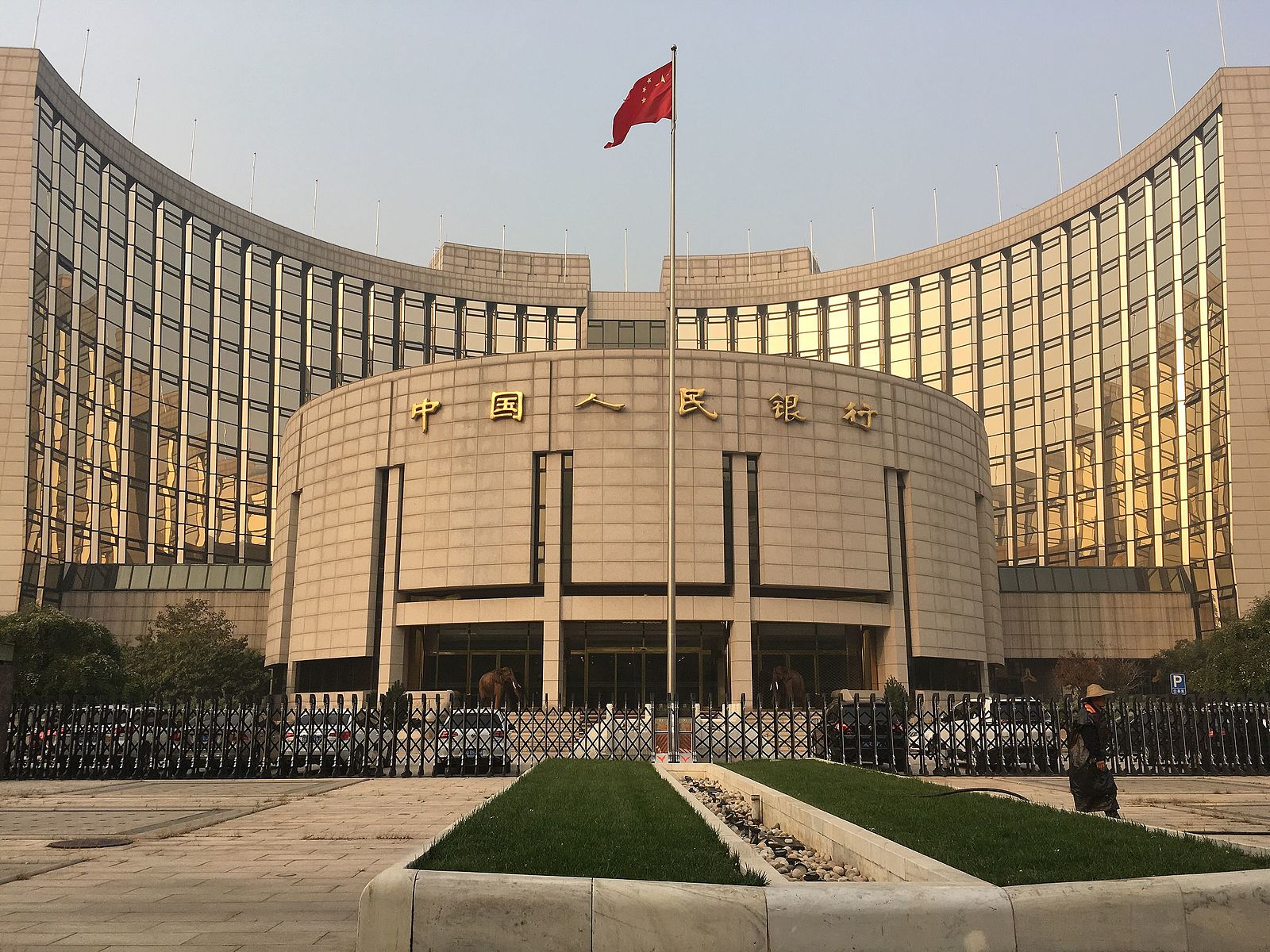

On April 7, China’s State Council promulgated Order No. 834, entitled the “Provisions on the Security of Industrial and Supply Chains.” The regulation took effect on promulgation, with no transition period. Embedded within it are two provisions, Articles 13 and 15, that establish a direct enforcement trap for multinational firms. Together, they empower Chinese regulators to penalize routine supply chain investigations and impose sweeping countermeasures on foreign companies whose compliance decisions “interrupt normal transactions” with Chinese parties and “threaten actual damage” to Chinese supply chain security. These penalties include import and export bans, fines, asset seizures, entry bans on corporate personnel, and designation on China’s Unreliable Entity List (UEL). Nothing in the text treats compliance with U.S. sanctions or export controls as an affirmative defense.
To understand the dual-track threat foreign firms now face, consider the 2024 Nanjing Maritime Court case that established the civil track. It was China’s first tort case brought under the Anti-Foreign Sanctions Law (AFSL). After the U.S. Office of Foreign Assets Control (OFAC) sanctioned a Chinese manufacturer, a Swiss buyer cited OFAC compliance to withhold an $11.86 million payment. The Chinese court rejected the compliance defense, set aside the contract’s foreign arbitration clause, and seized the buyer’s vessel. The buyer paid only after obtaining a specific OFAC license. In February 2026, the Supreme People’s Court publicized the outcome as a model of anti-sanctions enforcement. Two months later, Order 834 was promulgated.
Nanjing was a civil dispute (company versus company) requiring a plaintiff, a court, and explicit reliance on the AFSL’s anti-sanctions framework. The new regulation opens a parallel administrative track (state versus company) that drops the “sanctions” prerequisite entirely. It gives regulators direct authority to investigate and punish foreign companies simply for refusing to do business with Chinese partners. The OFAC-compliance reasoning dismissed by the Nanjing court is now a predicate act the Chinese State Council can target without waiting for a private lawsuit.
Articles 13 and 15 convert ordinary compliance with U.S. export controls and OFAC sanctions into conduct that triggers Chinese countermeasures. The collision is textual, not incidental, intersecting directly with Washington’s primary ownership-screening mechanisms: OFAC’s standing 50 Percent Rule and the Bureau of Industry and Security’s (BIS’s) parallel Affiliates Rule (which is currently suspended until November 2026).
What Articles 13 and 15 Actually Say
Order 834 is an administrative regulation one rung below statute in the Chinese legal hierarchy. Most of the regulation’s 18 articles address familiar institutional machinery: interagency coordination among more than 15 State Council departments under Article 3, a dynamic “key sectors list” under Article 7, risk monitoring and early warning under Articles 8 and 9, and reserves and emergency management under Articles 10 and 11. This is the familiar scaffolding of Chinese economic-security regulation, consolidating authorities that already exist in the National Security Law, the Foreign Relations Law, and the Foreign Trade Law.
Articles 13 and 15 are different. Article 13 prohibits “violating laws and regulations in carrying out investigations and other information collection activities related to industrial and supply chains.” The provision does not define what it prohibits. In practice, that ambiguity is the point. Read alongside the Data Security Law, the Counter-Espionage Law, and China’s cross-border data transfer rules, Article 13 allows regulators to treat routine supply chain diligence (such as ownership mapping, sub-tier supplier audits, and facility inspections) as unauthorized intelligence gathering. Legal analysts at Morgan Lewis have noted that this creates a direct conflict with the EU Corporate Sustainability Due Diligence Directive and U.S. Uyghur Forced Labor Prevention Act due diligence requirements.
Article 15 is the sharper instrument. It authorizes countermeasures where a foreign organization or individual, “in violation of the principles of normal market transactions,” interrupts normal dealings with Chinese parties or adopts discriminatory measures, and where such conduct “causes or threatens to cause actual damage” to industrial and supply chain security. Three features of this text deserve attention.
First, the regulation expands far beyond “anti-sanctions” by severing the prerequisite of foreign state action. While the AFSL is a retaliatory tool against foreign sovereign sanctions, Article 15 targets the unilateral commercial choices of private firms. The categorical shift matters: A routine de-risking decision made in a multinational headquarters and applied to a Chinese vendor is now an independent trigger for Chinese state punishment—even if the company never cites foreign legal requirements.
Second, the text targets conduct that causes “actual damage or the threat thereof.” This threat standard is a lower threshold than actual harm, authorizing investigation and countermeasures based on anticipated injury. As legal analysts have observed, this standard sits below the thresholds used in the UEL and AFSL regimes. Chinese agencies need not wait for a supply chain disruption to materialize.
Third, and most consequentially, the regulation contains no intent requirement. While a defendant’s state of mind is typically central to determining legal remedies, Article 15 discards this framework. The text does not ask whether a company meant to harm Chinese interests or simply followed routine internal policy. It asks only whether conduct “interrupted normal transactions” and threatens actual damage. As written, the text leaves foreign-sanctions compliance exposed.
Article 15 defines the substantive offense, but a parallel regulation promulgated the same day expands its blast radius. Order No. 835 (the Regulations on Countering Foreign Improper Extraterritorial Jurisdiction) introduces an enforcement mechanism analogous to secondary liability. The countermeasures explicitly reach organizations that “indirectly participate” in prohibited compliance acts, equipping regulators with “Prohibition Execution Orders” and unprecedented personal liability. In practice, the two instruments combine to close the loop between local execution and global mandate. For example, if a multinational headquarters instructs its Chinese subsidiary to sever ties with a vendor to comply with OFAC, Article 15 allows regulators to penalize the local subsidiary for the supply chain disruption. Simultaneously, Order 835 authorizes data flow restrictions, asset freezes, and “Malicious Entity” designation against the parent company, while targeting its C-suite executives with exit bans and potential criminal prosecution.
The Mechanics of the Collision
Together, Articles 13 and 15, both amplified by Order 835, guarantee a collision with the baseline operation of U.S. sanctions and export controls. Under Washington’s primary ownership-screening mechanisms (OFAC’s standing 50 Percent Rule and the parallel BIS Affiliates Rule), any entity that is 50 percent or more owned by designated persons is automatically restricted, even if the subsidiary itself does not appear on any official list. A multinational firm dealing with an unlisted Chinese company whose parent is restricted is treated exactly as if it were dealing directly with a blocked person. Crucially, these U.S. rules impose an affirmative obligation on the firm to map and verify underlying ownership structures before proceeding.
Compliance with either U.S. rule mandates deep supply chain diligence. An exporter cannot satisfy the OFAC 50 Percent Rule without mapping the ownership structure of Chinese counterparties through corporate registries or third-party screening. BIS explicitly defines this investigation as an “affirmative duty.” Under the Chinese framework, this exact compliance activity constitutes the restricted “information collection” targeted by Article 13. Regulators can then classify this routine diligence as a threat to supply chain security. That administrative classification directly unlocks the severe countermeasures authorized by Article 15.
The other half of the collision is the compliance decision itself. When diligence reveals majority ownership by a Specially Designated National (an individual or entity on the blocked-persons list, with whom U.S. persons are broadly barred from transacting), OFAC mandates that the multinational firm decline the transaction. Beijing utilized the White House’s temporary suspension of the BIS Affiliates Rule to promulgate Orders 834 and 835, building a regulatory seawall before the U.S. rule snaps back into force. Once reimposed, restricted parent ownership will dictate the exact same refusal. This mandatory withdrawal directly constitutes the “interruption of normal transactions.” Under Article 15, this interruption inherently causes “actual damage or the threat thereof” to the Chinese counterparty’s supply chain.
This creates a lose-lose compliance scenario. Proceeding with the transaction violates U.S. law. Declining it triggers Chinese countermeasures under Article 15 and the parallel Order 835. Merely documenting the ownership structure to make that choice violates Article 13. For a multinational firm with China-based operations, these countermeasures compound the cost of a routine OFAC compliance decision by orders of magnitude. The regulatory trap perversely incentivizes willful blindness—forcing firms to gamble on unverified supply chains rather than risk documenting a violation.
Why Beijing’s Past Restraint Is Cold Comfort
Critics of this analysis might point out that China has, historically speaking, exercised considerable restraint in deploying its countersanctions toolkit. Since the UEL’s inception, China’s Ministry of Commerce (MOFCOM) has designated only a few dozen entities. These targets are predominantly U.S. defense contractors with minimal commercial exposure to China. Likewise, AFSL designations have traditionally focused on politically symbolic actors, such as lawmakers and think tanks, rather than rank-and-file multinationals executing routine compliance.
That observation is accurate but overlooks three structural shifts. First, enforcement is decentralized. The Nanjing pathway does not require a central MOFCOM designation; a single Chinese vendor filing suit can set the same sequence in motion that froze the Swiss vessel. Second, Article 15 dramatically lowers the activation cost for administrative action. A mere “threat of damage” now suffices where prior instruments required actual harm. Third, the economic pressure that once constrained aggressive enforcement now motivates it. A November 2025 European Chamber survey found that roughly a third of firms affected by Chinese export controls were diverting sourcing away from China. That is precisely the capital-flight behavior Article 15 is designed to deter. The issue isn’t whether Beijing will immediately apply this regulation to all multinationals—it’s what unfolds when it singles out just one.
When Beijing does strike, the initial blow may be deceptively mild. Because Article 15 operates through administrative enforcement, it hands regulators wide discretion: They choose whether to act, how hard, and how fast. That discretion creates a built-in escalation ladder—regulators can open with interviews, warnings, or modest fines, holding catastrophic countermeasures such as UEL designation in reserve. This measured design makes the tool more potent. A scalable instrument allows Beijing to sidestep the immediate economic blowback of an all-out strike while retaining the ability to escalate at a time of its choosing. The mechanism works by holding the threat of devastation in reserve—coercing compliance without triggering a sudden flight of corporate capital.
* * *
Beijing’s new supply chain regulation fundamentally rewrites the terms of engagement for multinational firms operating in China. By defining routine supply chain diligence as illegal intelligence gathering and categorizing standard sanctions compliance as a threat to national security, Beijing has constructed an inescapable double-bind. The text transforms compliance with Washington’s strict-liability rules into an actionable offense under China’s own expanding strict-liability regime.
A sustainable U.S. response would likely require Washington to pivot from simply prescribing aggressive diligence to providing strategic cover: legal authorization and diplomatic backing that reduce the legal exposure firms face under Chinese law when they comply with U.S. rules, rather than leaving each firm to absorb it alone.
Before the Affiliates Rule resumes in November 2026, Treasury and Commerce could help the most exposed multinationals map where the collision is sharpest: which Chinese counterparties’ ownership will force a refusal once the rule bites, and which refusals would then trigger Article 15. The agencies could then build guardrails. OFAC could issue general licenses, or expedite specific ones, for the transactions Beijing is likeliest to target, the same license that resolved the Nanjing case; and BIS could state in guidance that diligence conducted to satisfy U.S. law is a compliance obligation, not the discriminatory conduct Article 15 is designed to punish. Over the long term, Washington and its allies might explore forging an agile, practical micro-defense coalition to share intelligence and mutually recognize compliance actions. Such collective shielding could help prevent Beijing from weaponizing its legal arsenal to isolate and penalize individual allied firms through salami-slicing tactics.
That window will not stay open long. Whether Washington builds these defenses now, before the first firm is in Beijing’s crosshairs, will determine whether allied companies meet this trap with a backstop behind them, or face it one by one.
.jpg?sfvrsn=104df884_5)