International Law in the Cuban Missile Crisis

Article 2(4) of the United Nations Charter—a crucial element of the post-World War II international legal order—prohibits the use of force against other states unless the UN Security Council authorizes it or there are grounds for self-defense against an actual or imminent armed attack. In light of current events, many scholars are coming to the conclusion that this foundational norm is on the brink of collapse given, among other instances, Russia’s invasion of Ukraine and the United States’ recent interventions in Venezuela and Iran. What is sometimes lost in the various preemptive autopsies of this prohibition is that it has been challenged continually since its inception, including during the Cold War, the 2003 invasion of Iraq, and other uses of force under questionable or novel legal grounds by different states.
To chart the future course for Article 2(4), it’s crucial to distinguish myth from the reality of its operation in practice. The Cuban missile crisis—the most dangerous nuclear standoff of the Cold War—is an apt case study to shed light on what international law can and cannot do in regulating recourse to force by states on its own. Although the crisis is often touted as a gold standard of what international law can accomplish in high-stakes contexts, the Kennedy administration’s decision-making, in fact, highlighted the limited value of Article 2(4) in constraining state conduct on its own. In short, the crisis showed that international law was used to justify and legitimize policy choices but did not exert a meaningful constraining effect on the Kennedy administration.
The Kennedy Administration’s Deliberations
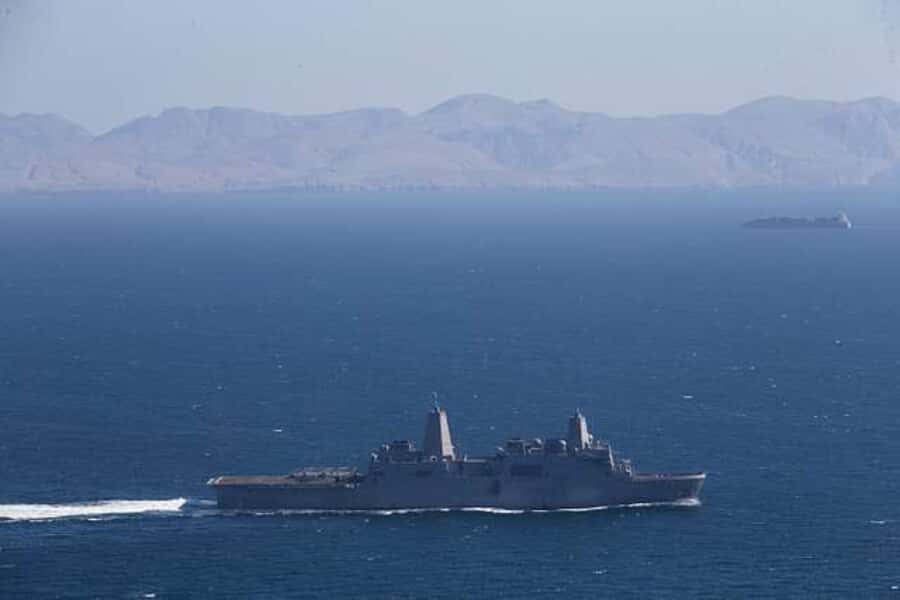
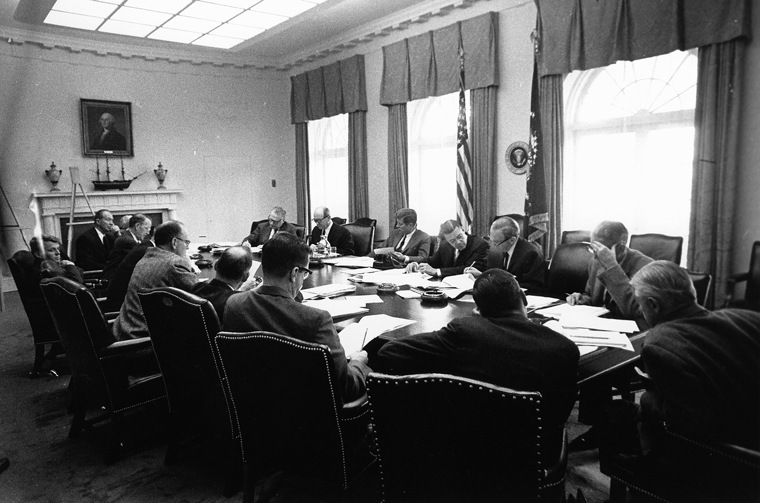
On the morning of Oct. 16, 1962, National Security Adviser McGeorge Bundy briefed President Kennedy about the installation of Soviet medium- and intermediate-range nuclear missiles in Cuba. In the coming days, Kennedy and his advisers, who formed the Executive Committee of the National Security Council (ExComm), discussed different options for removing the missiles, including limited and general airstrikes, a potential naval blockade, and an invasion of Cuba. They eventually decided on a naval blockade to interdict the delivery of offensive weapons to the island by the Soviet military. The United States euphemistically called the blockade a “defensive quarantine” to signal restraint in its actions and “avoid any implication of a state of war.” The policy eventually led to negotiations with the Soviet Union and the removal of Soviet missiles from the island in exchange for the U.S. promise not to invade Cuba, in addition to a secret assurance about the removal of U.S. Jupiter nuclear missiles from Turkey.
During their deliberations, members of the ExComm discussed the legality of various policy choices under international law. Since the Soviet Union and Cuba were not planning an immediate armed attack against the United States, all the proposed courses of action, including a blockade, could have violated the prohibition on the use of force in Article 2(4) of the UN Charter. Indeed, a mere placement of nuclear missiles in Cuba did not constitute an armed attack against the United States that would justify the use of force in self-defense under Article 51 of the UN Charter. In considering these legal challenges, U.S. legal advisers developed varying and controversial legal positions in an attempt to avoid the limitations under the charter and legally justify the choice of policies within the administration and to the world.
The Office of Legal Counsel (OLC) and other Justice Department officials argued that the use of force against Cuba could be justified based on self-defense grounds under Article 51 of the UN Charter. They supported the controversial concept of preventive war against perceived nuclear threats short of an imminent armed attack. Interestingly, the OLC opinion relied on the Monroe Doctrine as creating a regional custom with relaxed requirements of U.S. self-defense in the Western Hemisphere. The Department of State’s legal advisers, in turn, disagreed with the self-defense position, arguing that the Organ of Consultation of the Organization of American States (OAS) could recommend a “quarantine” of Cuba and thus render the necessary use of force lawful pursuant to Article 52 of the UN Charter on regional arrangements and agencies.
The difference in the legal positions of two departments’ lawyers correlated with the views of their leaders, Attorney General Robert “Bobby” Kennedy and Secretary of State Dean Rusk. As Abram Chayes put it, “the legal arguments were there, available for whatever use might be made of them by one or another participant or faction, grist for the mill of decision.”
Bobby Kennedy, the president’s brother and close adviser, had one of the most hawkish perspectives among ExComm members, initially arguing in favor of an outright invasion of Cuba and against softer responses, including the blockade. This should not be surprising, as the attorney general was, among other things, simultaneously supervising a secret operation—code-named “Mongoose”—aimed at “getting rid of the Castro regime” through sabotage, assassination attempts, and other covert activities. At one point during the ExComm’s deliberations, the attorney general posed the rhetorical question of whether “a blockade ever brought anybody down.” The Justice Department lawyers’ justifications of the United States’ unilateral use of force against Cuba in self-defense allowed a broad spectrum of policy options for the president unconstrained by the voting in the OAS and thus perfectly aligned with the attorney general’s preference for regime change in Cuba.
In contrast with President Kennedy’s brother, Secretary of State Rusk advocated for diplomacy from the beginning, as well as acting multilaterally with Latin American countries to build a coalition supporting the U.S. actions and resisting Soviet and Cuban objections. The Department of State’s opinion served Rusk’s position well by requiring OAS recommendation of the “quarantine” supported by at least two-thirds of OAS members. Ultimately, the Department of State’s opinion served as an official legal justification for U.S. actions before the world as President Kennedy opted for the so-called quarantine supported by the OAS recommendation.
Some ExComm members considered legal arguments altogether irrelevant in the crisis. Namely, former Secretary of State Dean Acheson—who participated in the ExComm’s discussions—argued that “legal niceties were so much pompous foolishness in a situation where the essential security of the United States, its prestige, its pledged word to defend the Americas, was threatened.” According to Acheson, regardless of a legal position, “[t]he world would understand that the President had done no more and no less than the situation required.”
Legal Justifications
Speaking at a Harvard Law School reunion event less than a month after the crisis, Chayes, a former Harvard Law professor and the Department of State’s legal adviser at the time, did not hide that the U.S. legal case regarding the “quarantine,” based on the OAS recommendation, tested the limits of the prohibition of the use of force under Article 2(4) of the UN Charter. He compared international law to American constitutional law, noting that “norms, to be durable, must be subject to growth and development as circumstances change.” Although the Kennedy administration provided a detailed legal rationale for the blockade and did not explicitly rely on unreasonably sweeping and erroneous self-defense arguments, its legal arguments based on the OAS recommendation remained highly controversial.
The U.S. position was built on Article 52 of the UN Charter, which allows regional organizations, such as the OAS, to take appropriate actions for the maintenance of international peace and security, provided they comply with the purpose and principles of the United Nations, including the prohibition on the use of force. Article 6 of the Rio Treaty provides that the OAS Organ of Consultation can agree on measures to address any situation that “might endanger the peace of America” short of an armed attack. Under Article 8 of the treaty, such measures may include the use of armed force, including a blockade. According to U.S. legal advisers and OAS members, the placement of Soviet missiles in Cuba endangered the peace of America, and thus the Organ of Consultation could recommend the “quarantine,” arguably making it lawful under Article 52 of the UN Charter.
There are two main problems with this position. First, similarly to Article 103 of the UN Charter, Article 10 of the Rio Treaty provides that its provisions should not be construed to prevail over the rights and obligations under the UN Charter. At the same time, under Article 53 of the UN Charter, regional organizations cannot take “enforcement actions” without the Security Council’s authorization. The imposition of quarantine to interdict the Soviet weapon shipments to Cuba was intended to coerce Cuba and the Soviet Union to change their actions and thus likely qualified as an enforcement action under Article 53, which required the UN Security Council’s authorization to be legal. Indeed, even U.S. legal advisers acknowledged that such an argument could be made. To counter this position, the U.S. argued that the OAS Organ of Consultation only recommended the use of force, not required its members to use it, and thus it did not amount to “enforcement action” under Article 53 of the UN Charter. Such an interpretation was, at best, a progressive development of international law. As legal scholar James S. Campbell noted at the time, “there is at present inadequate legal support for this contention, and the world community has yet to recognize the Cuban crisis as standing for the proposition that regional agencies are free to use armed force to maintain the peace in the absence of Security Council authorization when conditions justifying self-defensive action are not present.”
Second, although Cuba was a member of the OAS—albeit excluded from participation in its bodies—the Soviet Union was not a member and thus did not consent to the application of the OAS procedures under the Rio Treaty to it. Hence, there was a plausible argument that the OAS recommendation could not justify the use of force, including a blockade, against the Soviet Union and related limitation of its right of navigation in the high seas.
At the same time, the Soviet Union and Cuba had a sound legal basis for placing the Soviet missiles on the island. First, as a general matter, international law does not prohibit states from placing their military infrastructure on the territory of other states with the host state’s consent. Indeed, prior to the crisis, the U.S. also placed its Jupiter nuclear missiles in Turkey and Italy as a deterrent against Soviet attacks and considered it legal given the consent of these states.
Second, one of the goals of the Soviet deployment was to protect Cuba from potential attacks from the United States. Indeed, given the United States’ goal of regime change in Cuba—illustrated by the Bay of Pigs invasion of the island and the Mongoose operation, among other instances—the Soviet Union had good reasons to bolster Cuba’s capacity for self-defense under Article 51 of the UN Charter. In particular, Article 51 allowed the Soviets to argue that, regardless of whether offensive or defensive capabilities were deployed in Cuba—they could still be portrayed as defensive if judged not by their nature, but by their stated goal of defending Cuba. Interestingly, First Secretary of the Communist Party of the Soviet Union Nikita Khrushchev used the self-defense-of-Cuba argument, not balance-of-power considerations, to justify the placement of missiles before his colleagues in the Central Committee and before Soviet generals.
Paradoxically, despite Cuba’s and the Soviet Union’s good legal case, the U.S. effectively used its legal arguments to legitimize its policy position before its allies and the world writ large, including getting explicit backing of the blockade from all the OAS members except Cuba.
The Role of Law in the Crisis
Available legal accounts of the crisis tend to overestimate the role of international law in influencing Kennedy’s choice of the blockade, including by constraining the available policy options. In his seminal book on the Cuban missile crisis, Chayes identified three principal functions of law during the crisis: (a) a constraint on action in the sense of “narrow[ing] choice or exclud[ing] certain courses of action”; (b) a basis of justification or legitimation of action, meaning “showing that the decision is reconcilable with a generally accepted set of norms” to “assist in legitimating the action taken at home and abroad”; and (c) providing organizational structures, procedures, and forums. In Chayes’s view, “legal considerations […] operated on decision not directly, but mediately, filtered through the different purposes, perspectives, and susceptibilities of the players in the central game.” However, although it was used to legitimize and resist policy choices within the administration and in the court of public opinion, the historical record—contrary to Chayes’s account—indicates that international law did not meaningfully constrain the Kennedy administration, either directly or indirectly.
First, the mere fact that members of the ExComm considered and relied on the legal arguments described above does not in and of itself prove that law narrowed choice or excluded certain courses of action of the administration as Chayes seemed to suggest. It just meant that various factions within the Kennedy administration tried to justify their preferred policy options with legal arguments. In this sense, law served as a justification for a controversial blockade rather than a constraint. Second, as explained above, the United States was pushing the limits on the use of force under Article 2(4) and, thus, instead of being constrained, sought to expand the constraints of international law to legitimize the chosen blockade.
Third, recordings of the ExComm’s meetings suggest that one of the key reasons for the president’s change of heart in favor of the blockade was the significant risk that airstrikes or an invasion could easily escalate into nuclear war. Indeed, the CIA informed the president that at least eight operational Soviet medium-range missiles were discovered on the island that could be used in reply to U.S. military actions. As Under Secretary of State George Ball put it, “with [military options], you’re playing Russian roulette. You’re flipping a coin as to whether you end up with world war or not.”
Fourth, despite choosing the blockade as the initial course of action, President Kennedy explicitly noted that they “may need to do an airstrike with or without a warning” if the Soviets do not agree to remove their missiles from Cuba. Moreover, the OAS resolution was not limited to the blockade but recommended “all measures […] including the use of armed force” necessary to prevent the Soviet offensive assistance to Cuba, which could include airstrikes and an invasion. These factors suggest that international law did not function as a constraint on the U.S. choice of the “quarantine” in the crisis.
Admittedly, some members of the ExComm, including Bobby Kennedy, at some point voiced morality and legitimacy concerns about an attack without a warning that would resemble the Japanese attack on Pearl Harbor. “It’s a hell of a burden to carry,” the then-attorney general stated at one point. However, it was unclear how a mere warning could fully remove the stated moral concerns. As National Security Adviser Bundy wondered, “how much are you better off for history for asking 24 hours ahead of time, if [Khrushchev] says: ‘I want a summit,’ and you say ‘Nuts’?” Still, Chayes argued that these moral considerations signified the law’s constraining force because, according to him, “legal norm and moral precept are two expressions of the same deep human imperative.” To make this argument, Chayes narrowed down the prohibition of Article 2(4) to “at the very least […] aggression and surprise attack,” when in fact its provisions explicitly prohibited all the uses of force not authorized by the UN Charter. Regardless of what one makes of Chayes’s connection between law and morality, as mentioned earlier, President Kennedy, in his own words, seemed to be ready to order the airstrikes following the blockade “with or without warning,” if necessary.
* * *
Although international law did not meaningfully restrain the U.S. actions in the crisis, U.S. officials cared about the need to justify American actions, including in legal terms, to U.S. allies and partners and to the world writ large, to ensure that the Soviet Union and Cuba would not isolate the U.S. in the court of public opinion with their legal arguments about Cuba’s self-defense.