
Lawfare Daily: Scott Anderson on How Social Media Platforms Should Handle Unrecognized Regimes
How should social media platforms handle unrecognized regimes like the Taliban?
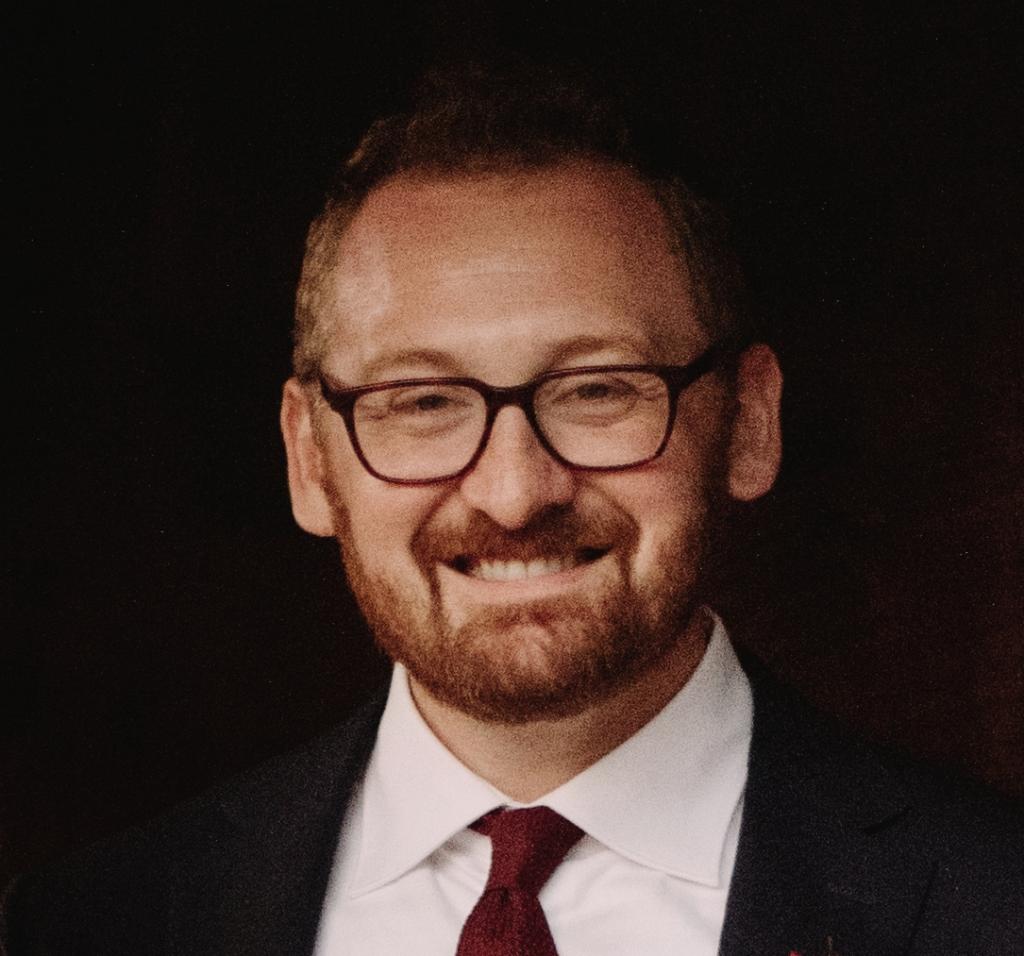
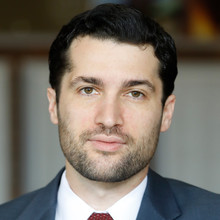
Lawfare Senior Editor Alan Rozenshtein speaks with Scott Anderson, Senior Editor at Lawfare, fellow in Governance Studies at the Brookings Institution, and non-resident senior fellow in the National Security Law Program at Columbia Law School, who recently wrote a report about how social media platforms should handle unrecognized regimes like the Taliban. They discuss how social media platforms responded to the Taliban's takeover of Afghanistan in 2021; the divergent approaches of Meta, YouTube, and X toward sanctioned entities and governmental accounts; the international law concepts of recognition and de facto authority; a proposed "de facto authorities rule" that would allow platforms to permit certain essential governmental functions by unrecognized regimes; and how this framework can be reconciled with U.S. and international sanctions requirement.
To receive ad-free podcasts, become a Lawfare Material Supporter at www.patreon.com/lawfare. You can also support Lawfare by making a one-time donation at https://givebutter.com/lawfare-institute.
Click the button below to view a transcript of this podcast. Please note that the transcript was auto-generated and may contain errors.
Transcript
[Intro]
Scott R. Anderson:
You had a lot of people saying, well, Taliban is using Twitter strategically to
coordinate its forces, to recruit, to do all sorts of other things that are
malign. And because they're not complying with U.S. sanctions, they're using it
for all these malign purposes that are bad, and it's effectively strengthening
the Taliban more than they would otherwise. And that's exactly what sanctions
are supposed to stop.
Alan Rozenshtein:
It's the Lawfare Podcast. I'm Alan Rozenshtein, associate
professor of law at the University of Minnesota and senior editor at Lawfare.
Today I'm talking to Scott Anderson, Lawfare senior editor and a fellow
in governance studies at the Brookings Institution, about a new report he's
written on how social media platform should handle unrecognized regimes like
the Taliban.
Scott R. Anderson: If
you don't accept them as the general de facto regime, that doesn't mean you
can't accept that they actually are serving certain core public functions. And
you lean into this definition of what it means to be a local de facto
authority.
Alan Rozenshtein: We
discussed the dilemma that the Taliban's 2021 takeover of Afghanistan created
for platforms and Scott's proposed framework, rooted in international law's treatment
of de facto authorities, that could help platforms strike a better balance
between sanctions compliance and serving civilian populations under these
regimes.
So, Scott let's start with the problem your paper addresses and
in particular the case study that you start off with, which is in the summer of
2021 the Taliban took over Afghanistan. This obviously had enormous
geopolitical ramifications, but it also presented a very specific problem for
America's social media companies.
Describe what that problem is and how they dealt with it.
Scott R. Anderson:
Yeah, it's reflective of a broader problem set, of which is kind of one unique
expression of that is, was parti—got a lot of attention, and particularly the
months after the collapse of the government in Afghanistan, the U.S.-backed
Islamic Republic of Afghanistan government.
You know, a number of times in recent history since the United
States and other countries have started aggressively applying sanctions to
different, particularly non-state armed groups, terrorist groups often and
vernacular, you've encountered situations where they have come to govern a
particular territory and control it, right.
You think of like Somalia in the 2000s or to some extent even
the late 1990s. You think of Yemen for a good part, of Houthi control, right—when
they're under Houthi control earlier, just, you know, in the last decade.
These pose all sorts of situations that are really complicated,
because you're taking a sanctions tool that is designed to aggressively isolate
the target of those entities, particularly terrorism-related sanctions, which,
again, were built upon the paradigm of an entity, an organization that is so
anathema to our political interests, we need to make them complete pariah.
So we want to isolate them from the economic system, global
economic system, from—along with everything else, political system, things like
that. And then you're applying it to all of a sudden the authorities who govern
a territory, including lots of innocent civilians who we care about and should
care about, and try and ensure they actually can get the things they need from
a government. Even if the government happens to be a malign terrorist group in
the view of like a good part of the world.
In the social media context, that really came to the fore of
the case of Afghanistan, because you had a fairly sophisticated, you know,
western-backed government for 20 years, up until 2021. This is, again, the
Islamic Republic of Afghanistan. Or almost 20 years.
And they used a lot of modern tools to engage with their public,
particularly because Afghanistan is like a fairly widely distributed population
with a lot of difficult terrain, difficult security situation for most of the
20 years, the Islamic Republic was in place. And so they used, among other
tools, social media, to get out there and reach out to people.
And this is not unusual for a lot of developing countries or
countries with severe access to resources or limited infrastructure or conflict
situations, where social media becomes a major gateway that average civilians
use to access the internet or a variety of services provided by the internet.
And because it is such a common tool and such a common means of accessing it,
that is how the government begins to backend it.
All of a sudden, the government needs doesn't need to develop
its own network of webpages or webpages that do a bunch, they just do what
small businesses do in the United States. They buy into the platform, and they
lean into that. Particularly Facebook, particularly prevalent, but other ones
also involved.
And then they just build the pages they need off that, and they
use it to DM civilians, DM citizens, provide services, provide notices. Well,
all of a sudden, all of these—when the Taliban took over, you had the situation
where the government that had claimed to own and operate, had set up and managed
most of these channels—because remember, they kind of predated a lot of these
social media companies coming to the fore, so they'd always controlled these
channels—all of a sudden, that government stopped existing.
And you had a new regime claiming to be the government, which
is the Taliban, but wasn't recognized by anyone, any government in the world.
And it actually still isn't up to this day. Now there are two governments that
kind of recognize it. China and Russia, that's about it. Russia does formerly,
China half and half, but that's recent as of the last year and a half.
So at the time, they seem completely isolated. Nobody knows how
to treat them. And these are all companies that again, are based in the United
States. Setting aside the Telegram and a few others that are, that are not.
But the most of the major social media companies are based in
the United States, subject to U.S. economic sanctions, really foundationally, and
the US interpretations of the law for things like contract law, other sorts of
disputes.
And so all of a sudden they are facing the situation saying,
well, we don't know who the official actor we're supposed to be deferring to is
in Afghanistan. Who is supposed to control the property of the state of
Afghanistan, including its social media channels?
And so how exactly you deal with that was a really difficult
challenge for all these platforms. And particularly because it's all happening
in 2021, an era where right after the 2020 election, still dealing after the
aftermath of the first Trump administration social media content moderation.
All these questions were really at the fore of kind of the
public discourse. I think this question, really got a ton of attention in those
first few months after the fall of the Islamic Republic Afghanistan in August 2021.
That really, I think, put forward this question that I thought was unique, but
also hearkened back to some prior situations for which there were legal and
policy practices that had been developed that hadn't fully been kind of ported
over to the scenario.
Alan Rozenshtein: And
so how did the different platforms, just to sort of give a preview and we'll
get into all the issues as we continue the conversation, but might just be
helpful to start with a sense of how, in that specific case, the different
platforms treated this and how in particular they may have diverged in how they
treated the particular issue of the Taliban in 2021?
Scott R. Anderson: So
you saw kind of two dominant strategies emerge really early on and then they
got a little more confused and blended over time. Three or four years passed
between this initial incident when this paper was published. And like over that
time we saw the trajectory sort of adjust for how these platforms approach the
Taliban.
Early on though, it was really two dominant models. You saw the
majority of platforms—Facebook, Google, YouTube—approach it through the lens of
sanctions compliance, and they said basically, look, Taliban's a terrorist
group. We just do not do business with terrorist groups. That means providing
them any sort of services—
Alan Rozenshtein: And
just say a little bit more about what it means to be a terrorist group for this
purpose.
What is the sanctioned regime that is being incorporated into
these policies?
Scott R. Anderson: Sure.
No, totally. That's useful. So the United States maintains a lot of separate
regime for designating terrorist groups, each of which have kind of different
legal meetings. And then there's also international sanctions that are run by
the United Nations, particularly related to al-Qaeda and affiliated groups of
which the Taliban is one.
And then there are other countries also have their own
individual terrorism designation systems. In the United States, the two most
significant systems are ones for FTOs, foreign terrorist organizations, which
is a statutory system set up by Congress, and then a separate regime for
specially designated global terrorists or SDGs that is set up by the president
pursuant to executive orders, using very broad, open-ended, delegated authority
given to him by Congress underneath the International Emergency Economic Powers
Act of 1977.
I mentioned this because this actually bears on certain legal
arguments that might be available for these different statutes as to how they
apply to social media in particular. But here, it's notable that unlike certain
other troubling jurisdictions where we've seen similar problems arise, Syria
just in the last year being a leading one, the Taliban was never designated as
an FTO.
It was only ever designated as an SDGT. That meant it fit in
that kind of ladder regime dominated by the International Emergency Economic
Powers Act, in particular IEEPA, but it was also designated under the UN
sanctions regime, meaning that the U.S.-designated sanctions were implemented
by the United Nations Participation Act, as well as IEEPA.
Meaning it was, there's kind of separate statutory authority
that had different implications for the available legal arguments a social
media company might have about complying.
And this becomes relevant to these two models of compliance
that we saw, or these two strategies that social media companies adopted.
One was sanctions compliance, where they said, hey, these are
sanctioned entities. Financial companies aren't supposed to be doing business
with them. We're not going to do business with them either. And then you got
the other strategy, which is primarily Twitter strategy.
Both, at the time—this was pre-Elon Musk purchase, ut it's been
relatively consistent since X—where they say, ‘Hey, look, we don't let anyone
who is actively engaging violence or urging violence to be on our platform or
to use our platform for that purpose, but we don't kick people out because of
who they are as a status basis, just based off sanctions alone. We do our own
assessment of their conduct and their activity. We don't just automatically
import US sanctions and use that as a means of removing people or barring
people from our platform.’
And their position for doing this, which has been a point of
controversy and became up during the first Trump administration after they
designated different Iranian agencies as in particular as.
Different sorts of terrorist entities and Twitter declined to
remove them. Twitter basically says, look, there is something called the Berman
exception to the International Emergency Economic Powers Act, which excuses
from the scope of IEEPA—that statute that authorizes the SDGT regime—excuses
from that all sorts of the ability to regulate all sorts of things related to
transfer of information and knowledge.
And there is a colorable, I would say strong probably argument
that at least in terms of pure social media services that are strictly under IEEPA
that could say, you know what? These probably don't apply to providing these
services.
You probably can't use a IEEPA to regulate these, or at least
there's a good argument you can't. And that's what Twitter has more or less
leaned into. Somewhat implicitly, you know, I'm not sure that you've ever come
up quite out expressly and say that, but that's the best way to square their
position with the law
For their part, the Treasury Department, it says no, well,
actually under the SDGT regime, because it's implementing UN sanctions and UN
Participations Act doesn't have a permanent amendment, we actually think it's
not. Limited to the Berman Amendment—by the Berman Amendment.
So we think we can restrict, you know, access to information
and stuff under this regime, at least where it's implementing un sanctions.
But notably, they never really brought any really hard
enforcement actions against Twitter, even where Twitter has very openly allowed
designated entities and individuals to maintain accounts and use them for
social media purposes. But they usually do stop them if they try and use them
to incite terrorism or to preach violence and things like that.
And so you had these two different models, one that is much
more of a, ‘we take the terrorism designations and we just say, we're just going
to apply that straight out.’
And that has come under criticism for being overly broad, because
arguably these social media companies are imposing restrictions that aren't
strictly required by the law and in a way that could have negative
repercussions for which we'll get to, particularly for people living under
those regimes.
And then you had the Twitter model, where it was much more free
speech-oriented. So for people who like that, that's good. Although, you know,
this isn't strictly in a U.S. constitutional context. But they're saying, okay,
so much more entities are, have free speech. It's much more limited in what,
who they're willing to cut off just because of sanctions or anything else.
The flip side of that is that you got a lot of people saying,
well, Taliban is using Twitter strategically to coordinate its forces to
recruit, to do all sorts of other things that are malign. And because they're
not complying with U.S. sanctions, they're using it for all these malign
purposes that are bad, and it's effectively strengthening the Taliban more than
they would otherwise. And that's exactly what sanctions are supposed to stop.
When you see a group like the Taliban govern a territory, and
particularly a territory like Afghanistan, where people really rely on social
media to actually access the internet, and it was really used as a major
communications vehicle for public services and public notice and information by
the Afghan government that the Taliban effectively controlled after August for
September, 2021.
The costs really get driven home by that. Because all of a
sudden you're saying no, even if the Facebook really is the best way to tell
Afghan civilians, Afghan citizens, ‘Hey, there's another COVID outbreak, stay
home.’ Or, ‘Hey, you know, we are worried about contamination from this water
source. Don't use this water source.’ Or ‘there's an insurgency in this area, don't
travel to this area,’ we're not going to let the governing authorities use that
for even that purpose because they're the Taliban, because they're a designated
entity.
And it's not a content-based restriction, it is a status-based
restriction. So the question then becomes, is there a more fine-tuned way to do
this?
This really came to the fore in a decision that the kind of
appellate body set up by Meta—Facebook, then Meta—set up to review its sort of
content moderation decisions. They, this came to the fore, decision that they
really wrestled with in 2021 and 2022 in a very narrow fact pattern.
But they've raised this point where they essentially said, Hey,
look, when we're dealing with these cases where a designated entity comes up
with, comes up into control of a territory and is fulfilling all these
governmental functions that we all agree are, have public legitimacy, are
things we actually need them to do, even if we don't like the group generally,
maybe we need a less binary approach to these sorts of scenarios. Maybe we
can't just say they're sanctioned, we just can't deal with them at all, because
maybe that doesn't actually serve the public good like we think it normally
does for terrorism and entities.
And that query, that prompt really was the impetus for this
paper, because I read that opinion at the time and I said, well, yeah, they're
right. Should be a gray area, a way to fill this gray area. It doesn't have to
be a strict binary. On top of that I think, as I lay on in the paper, there's
an argument in international law and related domestic law as to where you
should draw that line or where you can draw that line credibly and
legitimately. And that's what I try and flesh out with through the paper.
Alan Rozenshtein: So
let's get into that gray area. And I think it's helpful to first figure out
what the sort of the white and black are before we get into the gray. So the
two key concepts here are the idea of de jure recognition and de facto control
over a territory.
And so just for those of us who are not international lawyers,
who are not steeped in this, who concepts in this distinction, just outside of
the social media context, what do these terms refer to and why is the
difference so important?
Scott R. Anderson: So
you have to go to international law. A place that people don't like to go, but
sometimes it's useful.
Alan Rozenshtein: All
the way back to Grotius.
Scott R. Anderson: To
Grotius, the Westphalian state system et cetera, et cetera.
So the, in international law, those two terms, de jure and de facto
have been thrown around in sometimes inconsistent ways. So you can't always
just assume people are using this exact definition.
Alan Rozenshtein: And,
what are they for the non-Latin specialists among us? So what do they mean?
Scott R. Anderson: So
it generally, outside of this context, de jure means of the law, meaning they
have a legal status of something and de facto means of the facts essentially.
I'm, I don't speak Latin. I think that's basically what it
means, but they basically means it is a matter of being factual. It is a, meets
some sort of factual objective reality, whether or not it's recognized by the
law. And de jure is saying it's recognized by the law as having the status or
this capability regardless of whether the facts bear it out or not, right? That
depends on the legal system and how much it tracks the law.
This applies in recognition context. Recognition is the legal
act under which international law—by which somebody, some, an entity that is
claims to be a state, meaning it's like a territory representing a people,
inhabited by a people, and has certain international legal rights, or a
government claiming to represent that state, which is like the, you know,
regime governing it, is identified as a state, acknowledged as a state or, and
or a government.
And that's done by other states through their governments, because
international law is a horizontal system. There is not—you know, we have the
ICJ and things like that. Those are, remember, the products of state
sovereignty.
In the end, international law is super horizontal. All states
have equal legal status and weight and to, for them to engage, they have to
acknowledge each other in sort of a horizontal bargaining system or agreement
system. That's treaty law, essentially, or customary international law, where
it’s less based on express agreements, but is based on implicitly accepted
standards of conduct.
And so where this has resolved is in these two different types
of recognition, is the easiest way to synthesize it. One is de jure
recognition. This is the fullest type of recognition. This is when one state
looks at another regime and says, you are a government and we're going to treat
you like a foreign government.
Or they look at another territorial entity, geopolitical
entity, and they say, you are a state and we're going to treat you like a
state, and you get all the rights under a national law of state, all the
responsibilities. Your government can exercise them for you and we're going to
treat you that way.
That can happen sometimes, regardless of whether they are de facto
or they have that I sort of control.
Alan Rozenshtein: So
if you have like a government in exile somewhere, right, that an example.
Scott R. Anderson: Exactly.
That's the paradigmatic example. A government in exile may not control
anything, but sometimes governments will start like—
Alan Rozenshtein: So
like de Gaulle in England in World War II, right?
Scott R. Anderson: Yeah.
Alan Rozenshtein: He
is recognized as the whatever leader of France. Obviously, no one thinks he's
the actual leader of France in any sort of—
Scott R. Anderson: —effectively,
at that point.
Alan Rozenshtein: —effect
at that time.
Scott R. Anderson: Maybe
he was the rightful one, but he wasn't effectively. De facto standards of
conceptions of recognition. Although it's worth noting, not every, not everyone
considers this recognition. Sometimes people try and distinguish between de jure
recognition as being what we mean by recognition and this being just a
description of existing international legal obligations.
International law by the late 20th century has settled on—more
or less settled on the view, although this was a point of some debate for the
first half of the 20th century, leading into the second half has more or less
settled on the view that there are objective standards for what constitutes a
state and what constitutes a government.
For a state, it is usually that they are, have an effective
government. They can abide by their national legal obligations. There is a
fixed territory and a fixed population.
Those are the four things that may have been established kind
of under customary international law, dating back the Montevideo Convention of
1934, which is a treaty that first kind of laid those out.
And if for government, the question is, okay, to be a
government of a state, you exercise effective control over that state. And what
does that mean? It is a fuzzy standard, but there has certain tentpoles of kind
of like key criteria. And the effectiveness of it is essentially like, look,
are you operating with the, like, acquiescence of the public?
It doesn't mean consent, like informed, like knowledgeable,
like we're voting for you. But it means like, essentially, like, does most of
the public say, all right, you're the government, fine, we're going to let you
go about doing your job.
Alan Rozenshtein: Is
this kind of the Weberian idea that, you know, the sovereign is he who has kind
of a monopoly on a force in a particular jurisdiction?
Like it is just a question of like, are. Are you the guy, right,
whether for better or for worse, that people are like, well, you're the guy
with the most guns, so I guess you're our state.
Scott R. Anderson:
Maybe that part of that it can be forced. I mean, that can be certainly one way
of establishing effective control.
Like, no one can deny governments have come around by the force
of arms, right? Like that is the way most governments came around at some point
earlier in their history.
But we also acknowledge that like that hasn't been necessary
for lots of other governments to come about, right? Other governments have come
about through legal mechanisms or through political mechanisms and other things.
And so it really has come down to this question of, okay, do you have the
acquiescence of the public and is there a reason to think that acquiescence is
relatively complete, not fully complete.
It's okay to have areas in dispute like almost every other,
every state has like areas in dispute of control and political contention. But
is it more or less broad to be a general sort of de facto regime? And then is
it expected to endure? Is there a reason to think this is durable?
So essentially you get a testing window before a regime. Even
if they have effective control, you can say, well, let's see if this lasts for
a little bit. Right?
This de jure-de facto distinction is really notable in international
law. International law, it says if you meet the de facto standard, another
state has to treat you as if you are a state or government under international
law. Meaning they have to give you all the rights and obligations there.
But they don't have to de jure recognize you. That's actually
still at the discretion of the state. That's a discretionary act that no
international law can't compel on another state.
Alan Rozenshtein: But
what's left at that point, right? If—
Scott R. Anderson: A
lot. A lot more than you think.
Because international law—and this is to me, this is my big
academic point, I just published another, a different paper on this academic
point—like this is actually like a big delta that's not well-defined in
international law. It's a source of a lot of confusion in this area.
What is the difference that you owe between a de facto
government of a state that you do not recognize—de jure recognize—but that is
de facto, you accept it as de facto, it's, you can't deny it without violating
international law in your view, and what you owe de dure or what you can
provide a de dure recognized government that meets the same criteria. What's
that delta?
Generally, you know, it's a lot of discretionary stuff. I may
accept a regime in the back of my mind is saying, okay, yeah, I mean they
control this state and there's nothing I can do about it.
It doesn't mean I have to send diplomats. Doesn't mean I have
to enter into treaties with them. Doesn't mean I have to accept diplomats from
them. All those are discretionary things I'm not obligated to do with any
state. I don't have to maintain diplomatic relations with them.
Other trickier ones come into play about things like assets. So
who controls the assets of a foreign state? If I'm the United States and
Afghanistan has assets here, which it does, and this came up in regards to
central bank assets, most notably, what happens if I don't recognize a
government of that state who controls those assets?
And then the question then becomes, well, usually U.S. courts,
like many countries, they follow the determination policies of their
government, even if it doesn't align with international law. So you run the possibility
of the U.S. government be able to define, well, these assets should go to one
party's control or another.
That happened in Libya and Venezuela, where the U.S. government
recognized opposition movements and all of a sudden those opposition movements
because they were recognized by the U.S. government, even though they lacked de
facto control, all of a sudden they started controlling the U.S.-based assets
for those governments, or at least a substantial portion of them that weren't
subject to sanctions on the restrictions.
The sort of manipulation of that process becomes a very common
policy tool. It is very legally complicated. I think it's a little bit of a
legally contested area, to say the least. But the key point is there is
actually a big delta between de facto and de jure recognition.
But the way to think about it, I think, is that de facto is a
floor, of like a basic baseline criterion that you have to provide. And then de
jure is saying, we're going to give you the full basket of both rights and
courtesies and privileges we give to other states and governments.
Alan Rozenshtein: So
I think this may have been implicit in the last few examples that you gave, but
this distinction between de facto and de jure recognition, to continue using
that terminology, obviously it's of immense importance to the government
itself, and it's of immense importance to the leader and the diplomats, et
cetera, et cetera.
But what about to the individuals themselves, right? So if
you're a citizen of Afghanistan or a citizen of Somalia or a citizen of Syria,
as we'll talk about a little bit later, why do you ultimately care whether your
government is—just make it concrete, why do you care if your government is
recognized?
Again, not just as the de facto authority, right? Not just as,
okay, clearly this government runs the country, so we're not going to send
airplanes into the airspace, right, because we all understand what's going to
happen, but we're also going to have this additional question of whether
they're going to legally recognize the government as legitimate.
Scott R. Anderson: So
it, it can make a big difference in a variety of very specific contexts. The
place it tends to come up is what we often think of as kind of like domestic laws
and rules and regulations, like the things that really affect the household and
the home and individual property and business, right.
And then I would say also international trade, international
business where it comes home. Usually, when I get married, when I buy property,
when I do a variety of things that are great significance to me in my life
individually, they're recognized by my government. I go through the legal
process of my government and register them and get them certified.
And then by virtue of having gone through that legal process,
that status is recognized by foreign governments as well, and foreign states as
well.
So if I go with my wife to the United Kingdom, and, you know, we
have a dispute, she leaves me and we have a dispute over property, right, that's
with them in UK. The UK court's probably going to look back to the evidence I
can produce of us being married in the United States and say, the United States
recognizes this marriage.
We're actually not even going to second guess it. That's a
legit marriage. Unless there's like some sort of foundational public policy
implication like if my wife were underage or something when we got married. That
would implicate it and they'll say, we're going to recognize, we're going to
take that at face value.
They don't recognize that government. All of a sudden there's
no entity for me to go and get my domestic acts certified by institutionalized,
recognized by.
And that comes to cause other complications too. Let's say I
have a foreign business partner that I want to bring in and, you know, import a
bunch of goods or bring foreign investors in a, there's a question of, well,
who do they get permission to even come in?
If there's no recognized government, they may say, well, I'm
worried that maybe my government might face prosecution or penalize me or
object that I was doing something illegal. There may be questions about to
which, the extent to which I can get, you know, insurance coverage adequately
recognized in the courts of my home government if it only allows me to do
business in areas with the legal permission of the local authorities and my
home court, my home government doesn't recognize the local authorities in that
foreign country.
So all of a sudden it becomes real barrier to doing
international business. Pays, paying taxes is a big question about saying,
well, okay, let's say the Taliban collects taxes from me or either as a foreign
business or as somebody in Afghanistan. How do I know that those taxes are going
to be recognized if there's another regime a month later?
Or how am I going to rec know that those taxes are recognized
as legitimate by a country like the United States who, by the way, criminally
prosecutes people for foreign corruption? And giving money to people who aren't
foreign governments for legitimate taxes?
These are all big barriers, and they're really complicated. When
you don't have an acknowledged, formerly recognized or legal, you know,
effectively recognized government in place, it becomes really hard to do these
things.
And in the case of Afghanistan, that was a real point of
concern during this era because the thing that happened almost immediately
after the Taliban took control is that Afghanistan's entire economy collapsed.
It was economy based almost entirely—substantially, not almost,
maybe not almost entirely, but in the huge swaths on foreign assistance and the
infusion of funds related with United States and Western support. All that
foreign assistance, a lot of it cut out, not all of it, some humanitarian
assistance continued to flow in very targeted ways. Early on, heavily disrupted.
Obviously a lot of the western-backed U.S.-backed operations
there, a lot of companies got very spooked 'cause the Taliban does not have a
great reputation and left of their own volition.
And there became this question about saying, okay, well how do
we get people to reengage economically with Afghanistan? And what are the real
barriers to that?
That led ultimately in a kind of a separate, very interesting
story, governments to rapidly try and lift, in a rapid series of measures over
the first year or to the Taliban control, more, give more and more sanctions
relief until of ultimately they reached the point, as I discussed in this
paper, where they basically were saying, you can do whatever you need with
Afghanistan.
Please go back in. But part of it also was like separating,
apart from the actual prohibitions on engaging, these political ambiguity over
who controls it, who governs it, poses own costs. And those are going to be
pretty daunting for foreign businesses that places like Afghanistan are really
relying on, particularly when places like Afghanistan frankly, are probably
already pretty marginal markets.
Like, it's going to be, it's really risky environment for a lot
of these businesses to go operate in the first place. And so you are just
layering on top of that with additional uncertainty. That becomes a problem.
And so that's kind of particularly why I think this problem is particularly
acute and of concern in the Afghan context.
Alan Rozenshtein:
Alright, so we've established the two important legal distinctions here, or
rather the difference between def acto recognition and de jure recognition and
sort of why this is important for the civilians and the, again, the problem
that presents for the platforms.
So now let's get to what I take as sort of the core conceptual
part of the piece, which is the idea of what you call de facto or the local de facto
authority rule.
So just explain what that is as an international law concept,
and then why you think it's a useful way for platforms to think about
situations like what happened in Afghanistan in 2021.
Scott R. Anderson:
Yeah. So this is this an international law concept that really has fallen into
kind of disuse. It's not talked about very often. And like recognition
generally rarely gets like very detailed treatment in most international law treatises
at this sort of like level of application.
But it's an idea that dates back to early 20th century writings
when these ideas were being much more bandied about and there's much more
active academic discourse about them.
And it was a proposal, this idea that pointed out that yes, you
have sometimes you have de facto what are called general regimes to distinguish
them from local de facto regimes.
A general de facto regime is what I described previously, which
is that you are a regime in effective control of a state, but you are not de
jure recognized for whatever reason. But you're ineffective control, right, you
get that in, you're in control of the whole state.
But then there are also other cases that even by the early 20th
century, there was a number of incidents of state practice of with elements of opinio
iuris, like the idea that this is a legal, reflects legal duties that gives it
the status of customary international law.
There were some practices in place where regimes that could not
claim to control even effective control of the whole state, were nonetheless
being acknowledged of having the legal capacity to take certain steps as if
they were the government of a given state or territory. Sometimes just a portion
of a state.
Usually in pretty extreme circumstances like war or in
circumstances where the status was heavily disputed, like a post-conflict
situation, or sometimes in situations where it was like pseudo-colonial
environment where they just hadn't actually like developed a government of the
type that was recognized by European powers.
And so there were all these cases where they said, well,
there's like much narrower strips of authority.
The best example of this, interestingly, I think, or one of the
best examples come from U.S. law during, after the American Civil War. Where,
during, throughout the American Civil War there was, obviously you had all
these state governments doing governing individual states in the Confederacy,
none of which were recognized, obviously de jure by the U.S. government. Many
of which were contested, even de facto, whether they were recognized that there
was a hesitancy to lean into saying, well, okay, we're going to treat them like
governments, you know, if they're not governments.
But you had all these Americans, particularly after the Civil
War ended, who were reincorporated into America, who had been living under them
for years. And they'd done things like certified marriages, certified property
transfers, adjudicate—they ran the court system, they adjudicated all these
private disputes.
So what was going to happen to all of these decisions? Were
they just going to be invalidated? And the Supreme Court, U.S. Supreme Court,
ultimately said no, what we're going to do is we're going to acknowledge that
there were regimes and institutions filling these government public functions,
and that while we are not going to acknowledge acts that were intended to
further the rebellion or undermine Union policy or otherwise do things that
were of a kind of national policy—or I guess at that point, state policy sort
of perspective—we are going to acknowledge and accept when they do things that
are in the ordinary course of governance. And then we're going to allow them to
step in and fill those sorts of functions, like recognizing marriages and doing
property transfer and doing stuff like that domestically. And we're going to
accept all those acts as presumptively valid, as if they had come from a
foreign government.
That started getting applied in other contexts, where you saw
these long periods without a recognized government, with at least strips of
authority—Soviet Union is a class example where the United States didn't
recognize the Soviet government for almost twe—I think more than 20 years after
it seized power. And so you had this huge period of huge legal disruption.
Alan Rozenshtein: I
didn't, I didn't know that.
Scott R. Anderson: It
is a, oh, it's an insane story. It's really wild. It was actually the impetus
of a lot of pushback against this executive branch dominance recognition policy
in the early half of the 20th century.
Because you end up with really, really, seemingly inequitable
outcomes where you had the Soviet regime in the—in, so what would become the
Soviet Union, what is now the Soviet Union, but wasn't recognized at that time
by the United States would be still be allowed to do business in the United
States.
They come and they would be defrauded in the United States, and
they would be not allowed to sue over it. Because they were not the recognized
government.
Alan Rozenshtein:
It's just a large part of the—I'm just thinking of a, of the map. It's a very
large part of the map. It's pretty extraordinary to just not have a recognized
government.
Scott R. Anderson:
And that was part of the concern here.
And in some ways, I think the development of this local de facto
regime approach, which I would say Edwin Borchard—I've never had to say this
out loud, so I think I'm saying it right—Borchard, who was a fairly prominent
international lawyer in the first half of 20th century, he's the guy who I am
most closely associated with this, who I've read about him developing this most
thoroughly. And he was a deep critic of the non-recognition of the Soviet
regime, as well as other sorts of regimes in Eastern Europe in the early 20th
century, in the 1930s.
So I think this was in part an effort to show how we can
correct for some of the inequities that come from withholding recognition to
having to think of recognition as just a state by state binary, by essentially
saying sometimes there are circumstances where an entity fills a government
function, and we should accept that as valid.
And we should give it the ability to act on the behalf of the
state as if it were its government for those limited functions only, not
necessarily for anything more broadly than that.
And that sort of local de facto rule I think helps you really
navigate some of the political trickiness around this Taliban case and other
comparable cases and really is what becomes the seed for my approach in this
paper.
Alan Rozenshtein:
Which is, so just go on to explain, how does the local de facto rule help? You
know, if you're a Meta policy person or you're an X and you're trying to figure
out, okay, does the Taliban Water Reclamation Authority of Kabul, you know, do
they get an official account on X, how does this rule help me decide that
question?
Scott R. Anderson:
Yeah, so essentially what I argue is that the Taliban—there, there's a
resistance to de jure recognizing the Taliban. Again, only China and Russia
have done it. Russia’s actually the only country that’s fully done it.
China has accepted ambassadors to and from the Taliban, but has
said we don't actually recognize them, but we do accept ambassadors.
It's a little weird. Russia has formally come out now fully
recognized the af— Taliban as Afghanistan’s government, but as far as I'm
aware, I believe the only one, unless China maybe has taken an additional step
in that direction I haven't heard of in the last few weeks or few months.
But in addition to that, resistance to de jure recognizing
them, there's also a resistance to treating them as the general de facto
government of Afghanistan.
And this is actually even expressly articulated by people like
Mike McFaul, who was the Republican chairman of the House Foreign Affairs
Committee until recently until I think this past Congress, who wrote several
strongly worded letters, basically saying like, we shouldn't be taking steps to
advance even the de facto acknowledgement of the Taliban, because that
strengthened their hand.
And a lot of people felt that way around the world. I think you
can debate that position one way or the other. But it was a sentiment out
there, particularly with the Taliban, a group seeing as being seen as problematic
in a lot of regards, right? And that you didn't want to strengthen their hand.
And so it became really hard to say, well, are we—even though
the Taliban, arguably you could make a strong argument they meet the definition
for a general de facto regime, even if you don't want to give them de jure
recognition, do you want to accept them as having such broad authority over all
elements of the state that are the non-discretionary elements?
And there's a strong pushback, there's political resilience to
that. What I argue in this paper—and I should say, I wrote a companion paper about,
entitled “Taliban's De Facto Future” in the Scandinavian Journal of Military
Studies for this kind of volume that they turned into a book last year that is
a similar concept in the public law sector, but this is kinda the private
sector application of that—which basically the argument is, well, if you don't
accept them as the general de facto regime, that doesn't mean you can't accept
that they actually are serving certain core public functions.
And you lean into this definition of what it means to be a
local de facto authority, which the International Law Commission, the UN body
kind of assigned responsibility for codifying and developing international law
standards articulated in the Articles on the Rules for States in Regards to Internationally
Wrongful Acts.
The ARSWA—Article of Responsibility of States for Internationally
Wrongful Acts. There we go.
They're pretty influential and not necessarily clearly binding,
most states haven't joined them, but generally seen as pretty reflective of
customer international law. And there they basically laid out criteria,
basically saying like, look, if it's situations of exigency, there's no other
entity that can step into play this function, and they're serving what is seen
as a traditional governmental function and, in a kind of even-handed way, then
you can recognize an entity as filling that function.
Even if it's not a full de facto regime, even if it's just this
local de facto just filling this one function, that gives you a toolkit by
which you can say, Hey Taliban, we're not going to accept you even as de facto,
as being able to do everything on behalf of the state, but where we can reach
consensus that what you're doing is an ordinary governmental thing, maybe we
can give status to that alone.
Alan Rozenshtein: So
who is the we here? Because, because, so one question I have is. Let's say—and
I think this makes sense—let's say that, look we're going to accept that when
the Taliban is acting as the local water system, let's just stick with that
example. Like they're the government for water purposes, and it's important
that a water system be able to send updates to its citizens and its customers
about what is not potable water. Fair enough.
But is that going to be a decision for the social media
companies to themselves make? And if so, how do they harmonize their
determination here with whatever the domestic law on sanctions is or material
support terrorism, or is your proposal that the relevant entity in the State
Department will say, we're going to do this local de facto authority
recognition for this list of functions. And then social media companies, when
you are asked by the Taliban water system to give them an account, please, on X
or Instagram or whatever, you can look to our guidance that, for this purpose
and this purpose alone, you can do business with these people.
So I'm just curious, mechanically, how does this work?
Scott R. Anderson: So
I really think it, it is and probably would functionally operate as a kind of
an either-and-or sort of system, essentially. And that's actually the two
papers I wrote, like kind of sister paper of this piece that came out last
year. The recognition of the Taliban de facto future that does it with the
public sector context.
It talks about it in the like interstate context, right? So
there I basically say, look, this is a situation where you could get states
together, like through the UN system where the UN has been super active about
coordinating recognition policies in regards to the Taliban since 2021, so it's
like a uniquely likely, I think plausible case for the UN playing this sort of
role, and serve as kind of a clearinghouse and say like, what can we come on
consensus on?
Set up a political process to say where can we agree these are
legit functions the Taliban is filling, even if we don't accept it as the
actual, even de facto state government, what functions that is filling that are
essential and why don't we accept that it can do these?
Because that's going to ease a lot of these economic and other
costs that come with non-recognition. But if the governments aren't willing to
do that, they haven't taken that step yet, I think there's space for the
private sector to be able to do that individually. And we know this actually is
already happening.
There are a number of cases, even in the first few months after
the Taliban took control, where Facebook or Twitter or other platforms would
make ad hoc exceptions to their usual rules banning access to these for certain
activities. Right?
And usually it's because they got through—somebody who's the
right content manager looked at it and weighed the public interest involved and
said, yeah, in this case we think the public interest kind of outweighs it.
And the truth is the exposure of these like ad hoc incidents is
relatively limited when they're at to these companies. When they're at a
limited scale. It's not clear what like the client liability would be. Maybe
they would get a sanction slap on the risk. But again, U.S. government is not
that active in enforcing these sanctions because of that question about how
this whole regime even applies to social media, that I basically say, look,
that gives you a lot more free reign.
The Twitter case shows like you can go pretty far in not
categorically applying U.S. sanctions in the social media space, even though
maybe there's an argument that you should do so more robustly. Maybe you can
use that to, to strike a more fine balance. To say, well, hey, we're going to
explain to state governments why we're permitting certain things.
And when you explain it to them, you follow the local de facto
rule, you can tie it back to their own rules and their own behavior, their own
practices under international law—and by the way, many of which are important
and reflected in U.S. domestic law now too—to say, look, this is how U.S.
courts, this is how international courts have approached similar circumstances.
We're just trying to do it.
And then you can tie it through, you know, industry
coordination. You can try and get different companies together to talk about
this and coordinate their standards. That's within an industry. You could get
different industries to say, okay, we are all up and down the kind of
production chain going to support you know, hydroelectric sector in under
Taliban governance, 'cause we recognize this is something every government
would want to do and we're going to lean into it.
And you can do things like tie it to international best
standards, tie it to international legal obligations, tie it to all the things
you expect states, reasonably expect a responsible state to be doing. And you
could say, okay, well if they're doing it in line with international standards,
why would we think this isn't something a government would do? This is
something that literally the international experts are saying, you should do
this government.
This isn't going to get you everywhere. There's still going to
be lots of stuff that Taliban’s not going to be allowed to do, but it lets you
open up that aperture a little bit to a lot of key activities that probably
matter a lot to everyday Afghans.
And that would make social media a much more available tool for
those public purposes that are important.
Alan Rozenshtein: So
there's a lot more to discuss, and in particular about how this extends to sort
of other cases like Syria. But I think we're going to have to wrap here.
I really recommend people who are interested in this read the
paper. It's an extremely interesting exploration of not just sort of this
policy, this discrete policy issue, but also these very interesting, broader
intellectual questions about recognition. And as someone who is not an
international law expert, I at least found it extremely interesting.
So, thank you Scott for writing the paper and coming on the
podcast to talk about it.
Scott R. Anderson:
Yeah. Thank you for having me.
Alan Rozenshtein: The
Lawfare Podcast is produced in cooperation with the Brookings
Institution. You can get ad-free versions of this and other Lawfare
podcasts by becoming a Lawfare material supporter at our website, lawfaremedia.org/support.
You'll also get access to special events and other content available only to
our supporters.
Please rate and review us wherever you get your podcasts. Look
out for our other podcasts, including Rational Security, Allies, The
Aftermath, and Escalation, our latest Lawfare Presents
podcast series about the war in Ukraine. Check out our written work at lawfaremedia.org.
This podcast is edited by Jen Patja. Our theme song is from ALIBI
Music. As always, thanks for listening.
.jpg?sfvrsn=118b03e5_5)
.jpg?sfvrsn=8588c21_5)
