The Counterterrorism Challenge in Afghanistan’s Borderlands


Editor’s Note: Afghanistan is suffering a humanitarian crisis, and the return of refugees from Iran and Pakistan has made a bad situation worse. Liya Khan, a former State Department official, and researcher Andrew Mines argue that the slashing of aid to Afghanistan poses a security as well as a humanitarian risk, enabling the growth of groups like the Islamic State-Khorasan Province in the country.
***
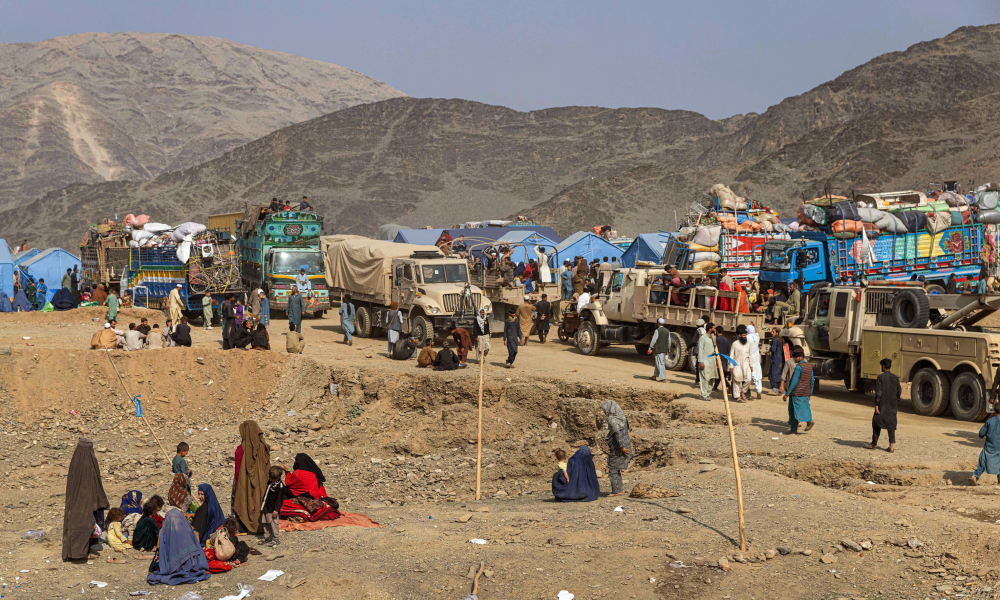
In 2025, an estimated 2.9 million Afghans returned to Taliban-ruled Afghanistan. More than half were sent back by force, with many experiencing detention and harassment in and deportation from the countries where they were residing. Forced returns have continued into 2026 and are accelerating toward a humanitarian breaking point.
The security risks are just as urgent. Former officials and analysts have already warned of armed groups, including the Islamic State-Khorasan Province (IS-K), recruiting and coercing returnees into their ranks. For many younger returnees in particular, extreme poverty, social isolation, fears of persecution by the Taliban, and resentment make them highly vulnerable to terrorist recruitment.
If the United States continues to ignore this crisis, it and its partners in South and Central Asia risk handing terrorist groups like IS-K opportunities to consolidate local control and bolster their campaigns beyond Afghanistan’s borders.
Rising Displacement and Declining Support
When the Taliban seized power in 2021, a devastating series of security, economic, and humanitarian crises converged. The number of Afghans fleeing to Pakistan and Iran rose steadily until the end of 2023, bringing the population of Afghans in Pakistan close to 2 million and to more than 3 million in Iran. In concert with a coalition of international donor allies, the United States—through USAID’s Bureau of Humanitarian Assistance and the State Department’s Bureau of Population, Refugees, and Migration (PRM)—surged millions of dollars in humanitarian assistance to prevent a complete humanitarian collapse in the immediate aftermath of the Taliban takeover. A portion of this assistance specifically targeted the heightened flow of refugees and returnees across both sides of the Afghan border.
From 2022 to 2024, despite the Taliban’s regressive edicts, natural disasters, and economic instability, Afghanistan avoided falling off the humanitarian cliff. Food aid prevented the onset of famine in several of Afghanistan’s climate-affected farming regions, and humanitarian actors worked consistently to counteract the worst effects of the Taliban’s operating restrictions on aid organizations.
In 2025, however, the situation inside Afghanistan began to deteriorate rapidly. In January, the United States suspended nearly all of its humanitarian aid globally. Then, in April, the United States, once the largest humanitarian donor in Afghanistan, terminated nearly all of its $1.8 billion in humanitarian and development assistance inside the country.
Around the same time, tensions between the Taliban and Pakistan and untenable conditions in Iran triggered a rapid rise in the number of Afghans facing deportation. Of the nearly 2.9 million Afghans who returned to Afghanistan from Iran and Pakistan in 2025, more than half were forcibly returned. Iran accelerated the deportation of over 900,000 Afghans in response to rampant disinformation spread by the Iranian government that labeled Afghans as spies for Israel. Pakistan increased its pace targeting Afghans for removal under the Illegal Foreigners Repatriation Plan, which has spurred waves of deportations and voluntary returns since 2023. Pakistan paused additional phases of deportations pending resettlement negotiations with the United States, but after the global suspension of U.S. refugee resettlement operations in January 2025, Pakistan resumed removals of Afghans. Forced returns also spiked following displacement caused by clashes between the Taliban and Pakistan in October 2025, as fighting occurred across Kabul, Paktika, Kunar, and Nangarhar provinces. Similar waves of returns have been documented as both sides traded retaliatory attacks in border areas in early 2026.
Returnees face many vulnerabilities, including a sustained economic downturn, heightened repression, and a lack of social support. Nearly 63 percent of returnee households lack adequate access to food. Nearly 88 percent report indebtedness to pay for basic needs. Humanitarian organizations are stretched beyond their increasingly limited capacity, leaving returnees more vulnerable than ever and accelerating the deterioration of conditions on both sides of the border. Returnees report a lack of sanitation, food, and medical care due to drastic cuts to aid organizations.
The dissolution of State Department grants that provided immediate assistance to returnees via eight border and transit reception centers has severely inhibited humanitarian efforts on both borders. These centers served as a physical bulwark against the presence of the Taliban and other threat actors in the area. Humanitarian organizations on the border retained presences close to, if not immediately on, zero-point (the actual physical border crossing) border entries, creating screening zones with security perimeters to direct the flow of returnees from zero-point to service provision areas. This ensured more stringent safety conditions in high-traffic areas because local border security forces were reinforced with UN agency security members and kept other actors, including the Taliban and other armed groups, a certain distance away from these areas, which were largely secured by humanitarian actors. The centers also offered transmittable disease screenings, temporary shelter, transportation assistance, and specialized help for particularly vulnerable returnees, including women and children. Program reporting from these grants provided real-time information on border dynamics, returnee flows, and security flashpoints back to diplomatic staff in Washington, Islamabad, and Doha. The loss of this insight and partner relationship is particularly concerning as the security environment along the border with Pakistan has deteriorated. Since early 2026, cross-border clashes between Afghanistan and Pakistan have already displaced more than 16,000 households across five Afghan border provinces.
With the blanket termination of all U.S.-funded assistance inside Afghanistan, the lines of communication and systems for early warnings at both borders have gone cold. In July 2025, the State Department eliminated the PRM office that oversaw Afghanistan, Pakistan, Central Asia, and Iran, as well as the overseas roles that triangulated reporting on population movements and refugees across the region. Despite statements that these efforts would be reconstituted inside the State Department’s regional bureaus, no programs or specialists have been reactivated.
Borderlands, Aid, and Terrorist Recruitment
For decades, border areas have been where terrorist groups thrive. After Kabul fell in 2021, terrorist groups aligned with the Islamic State, al-Qaeda, and the Taliban quickly set up shop in Afghanistan’s borderlands. The Taliban either supported or failed to stop this expansion of terrorist training camps and safe houses, many of which lay not far from humanitarian corridors and logistical hubs in border areas.
Aid implementers provide a range of relief services to local populations that remove vulnerabilities that terrorist groups use to recruit and win influence. They also provide an early warning capability that is virtually impossible to replicate. This is in part why IS-K ramped up its threats against humanitarians from 2022 to 2024, following years of attacks targeting aid convoys, staff, offices, and hospitals. Since IS-K’s formation in 2015, borderlands in provinces like Nangarhar, Kunar, and other areas have been instrumental to the group’s success and survival. IS-K’s ideology—which positions it as committed to a global struggle, as opposed to “nationalist” Taliban sellouts—requires such extreme stances, but the practical drivers underpinning that violent ideological stance are highly localized, community-by-community contests between the groups to secure influence, support, and strength. In this case, the aid targeted by IS-K would bolster the Taliban indirectly by removing vulnerabilities that aid IS-K. Aid implementers understand that contest better than anyone except the communities themselves.
Today, IS-K is fighting for advantage at the margins of Afghan society, and the margins might start to tilt back in their favor. Last year, amid deteriorating economic conditions, the Taliban leadership made major cuts to security personnel, including in contested areas of northern Afghanistan where IS-K cells are active. This will likely promote similar financial and personal grievances that helped IS-K to woo disgruntled Taliban commanders and fighters back during its formative years. Despite recent setbacks, the northern and northeastern border provinces of Afghanistan retain many camps, safe havens, and types of support infrastructure belonging to IS-K or those groups that have historically shared and pooled resources, like factions of the Tehrik-e-Taliban Pakistan. Now add to this mix thousands of returnees facing conditions of extreme poverty, social isolation in a “home” country they have never known, persecution by the Taliban (who already fear that Pakistan is smuggling IS-K supporters into the country to counter their former Taliban allies), and resentment against the foreign powers they see as responsible for their plight, all of whom IS-K says are part of an international conspiracy against them. It is a potential recruitment boon.
Today, analysts, security professionals, and the latest U.S. counterterrorism strategy rightly point to IS-K’s track record of transnational attacks, the role of Central Asians in external operations, and incitement to attack Western countries as a top national security concern. These are indeed serious threats, but drastically and suddenly cutting a key component to understanding and countering IS-K and other terrorist threats in their heartlands risks making this dangerous problem worse.
Preventing a Counterterrorism Blind Spot
The State Department should reconstitute targeted humanitarian assistance in Afghanistan’s border areas as promised—and apply the oversight and standards it sees fit. Blanket termination of programs that stabilized humanitarian conditions in some of the most volatile, highly trafficked border regions in the world does not fulfill the State Department’s priorities of making the United States “stronger, safer, and more prosperous.” Rehiring in the State Department and the formulation of a new humanitarian bureau should reflect technical acumen and the deep institutional trust required to operate in Afghanistan.
The State Department’s new humanitarian bureau should reactivate its seat on the UN refugee agency’s regional platform that convenes multilateral work plans around support and resettlement of Afghan returnees and refugees across Afghanistan, Pakistan, Iran, and Central Asia. The elimination of the roles and offices that oversee these partnerships creates a blind spot for the United States on global efforts that address the rapid, high-volume movements of returnees and refugees across borders.
Any serious argument for recalibrating aid must acknowledge the direct counterterrorism implications of cuts. The United States spent billions of dollars and many lives fighting the Islamic State in Afghanistan. Small, targeted spending to address overlapping aid and security priorities can prevent conditions that may give rise to the group’s resurgence.
_tatort_101032.jpg?sfvrsn=94d6ef59_5)