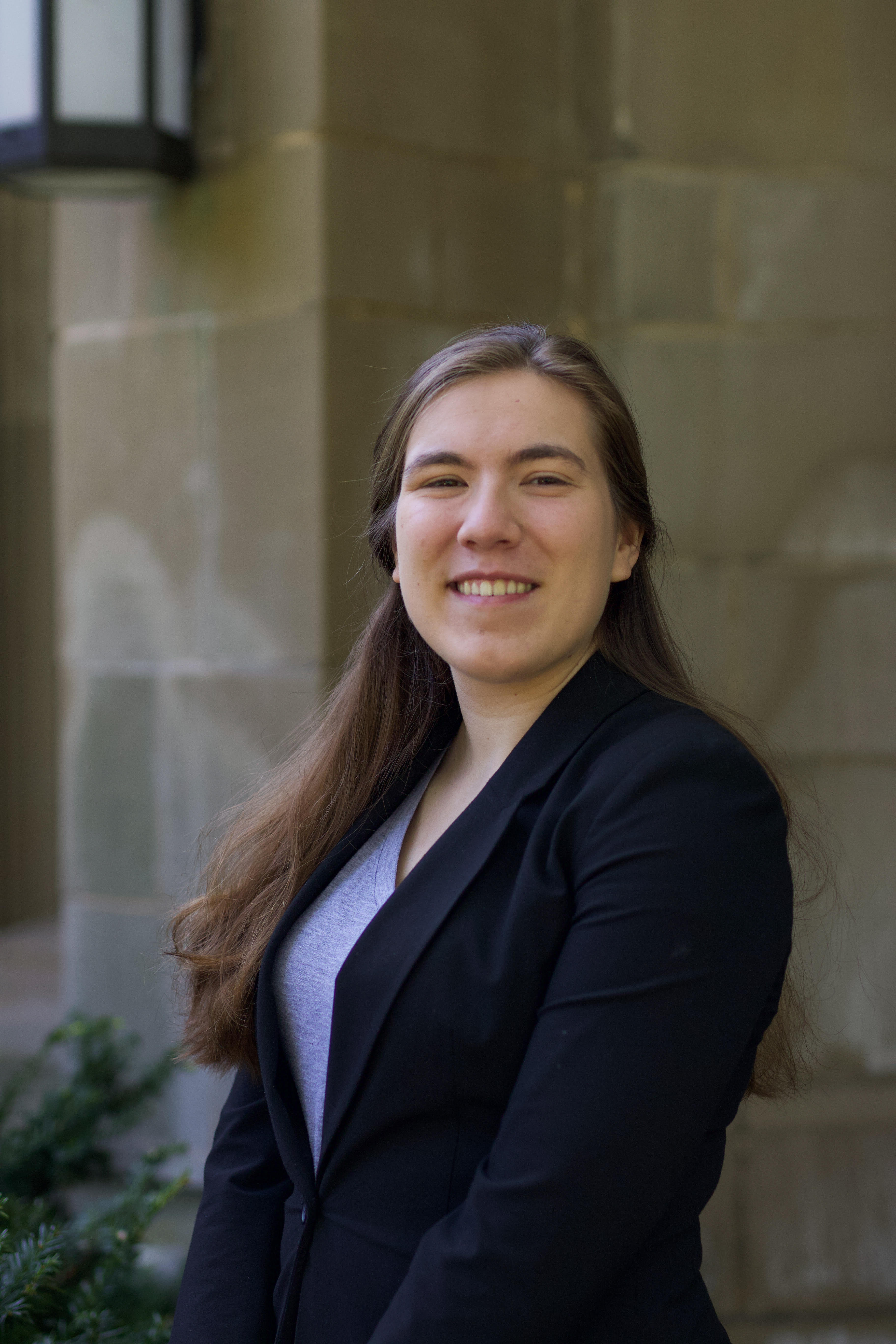
Julia Curlee analyzed why so many purged national security officials choose to remain silent about their treatment. Curlee explained that the Trump administration has leverage to punish dissent in the government, private sector, and civil society, resulting in a system of self-censorship where former officials would rather stay quiet than risk their livelihoods.
On Lawfare Daily, Curlee and Michael Feinberg joined Benjamin Wittes to discuss Curlee’s new article on the incentives that encourage former intelligence community members to stay quiet when they are purged from the government. They considered what those pressures look like, the scope of former officials affected, and more.
Molly Roberts unpacked speculation about the “rogue clerk” scenario ahead of the midterms, wherein a House of Representatives clerk could manipulate which newly elected members could vote for speaker, who could then refuse to swear in members of the opposing party. Roberts argued that courts likely could intervene before such a scheme could take place—since the clerk’s roll-making duty is a ministerial one enforceable by mandamus—but the scenario still has the potential to sow chaos and is worth taking seriously.
On this week’s Lawfare Live: The Trials of the Trump Administration, Wittes sat down with Roberts, Anna Bower, and Eric Columbus to discuss the latest developments in litigation surrounding the Trump administration, including updates in the litigation over President Trump’s executive order targeting mail-in voting, the Justice Department’s filing suggesting that the Kennedy Center may be torn down, the prosecution of Rep. LaMonica McIver, and more.
Chris Mirasola broke down the Department of Justice Office of Legal Counsel’s new legal opinion that states military personnel can arrest individuals after they leave a national defense area. Mirasola argued the opinion ignores recent precedent on the Posse Comitatus Act, misinterpreting the requirements for off-base arrests and what constitutes an acceptable military purpose.
Seamus Hughes and Peter Beck remembered the Annunciation Catholic Church shooting that occurred one year ago. They argued that the attack reflects a broader “true crime community” subculture in which teens are pushed toward violence by online networks that reward it with notoriety and warned that there is often not enough support to guide them away from that path.
Matthew B. Lawrence, Mark Nevitt, and Amelia Powell highlighted an easily missed concern with a proposed bill to prevent government shutdowns by funding the government automatically: it could violate the Constitution’s requirement that the army be funded for only two years at a time. The authors explained that though this is not the first time such automatic funding proposals have been considered, intervening court decisions have made their unconstitutionality even more apparent than when first proposed.
Sarah Elaine Harrison argued that debating whether the U.S.’s strikes against boats in the Caribbean are war crimes is a distraction from the simpler, graver truth: they are extrajudicial killings—that is, murder under U.S. law—and evidence of the Trump administration’s slide toward authoritarianism. Harrison encouraged Congress to push back by highlighting how the illegal killings are bad drug policy.
On Lawfare Daily, Byman sat down with Andrew Yeo to talk about Trump's decision to engage in talks with North Korea's leader while curtailing military exercises with South Korea. They discussed what might be expected from negotiations with North Korea, how Seoul perceives Trump's policy changes, and how curtailing military exercises will affect South Korean and U.S. capabilities.
Also on Lawfare Daily, Wittes spoke with Bower, Roberts, and Columbus about Chief Justice John Roberts’s stay of the injunction preventing the construction of the White House ballroom, updates in the prosecution of Don Lemon, two courts of appeal ruling against acting U.S. attorneys, developments in the Kennedy Center litigation, and more.
Siena Anstis, Natalia Krapiva, and Kate Pundyk analyzed the U.K. Supreme Court’s decision that Bahrain does not have sovereign immunity in a case brought by Bahraini dissidents alleging they were targeted by spyware, even though the perpetrators were not in the U.K. The authors explained that the case adds important legal protections for victims of digital transnational repression but raises important questions about how the new precedent interacts with treaty obligations.
On Rational Security, Scott R. Anderson sat down with Wittes, Curlee, and Alex Zerden to talk through the week’s big national security news stories, including a Russian drone guided by artificial intelligence (AI) attacking a target in Ukraine, the U.S.’s new sanctions against Iran and its trading partners, the collapse of U.S.-Canada trade talks, and more.
On Lawfare Daily, Natan Sachs joined Daniel Byman to discuss who is likely to win the Oct. 27 Israeli elections, what the consequences might be for wars in Gaza and Iran, how the winner could impact Israeli domestic politics, the role of small parties, and how Trump might sway the vote.
In the latest edition of Lawfare's Foreign Policy Essay series, Erik Skare explained the unique position of the Palestinian Islamic Jihad (PIJ) in negotiations between the U.S. and Hamas. Skare argued that the proposed peace deal, which would require all fighters in Gaza to put down their arms, gives the group a choice: set aside previous ideological commitments and continue its opposition through the electoral system or seek to take Hamas’s place as the face of armed Palestinian resistance.
J.B. Branch argued that the Slaughter decision, which made it easier for the president to remove appointed officials, incentivizes Federal Trade Commission (FTC) commissioners to align more closely with the president. Branch highlighted AI regulation as an area where that shift in incentives is likely to prove consequential. For example, he pointed to the FTC’s proposed AI Policy Statement, which can be interpreted to preempt state AI laws, aligning with the administration’s broader AI policy and expanding executive power.
Kate Klonick and Renée DiResta highlighted how decisions made by AI companies about what information their models consult impact the information they provide to users. Klonick and DiResta identified three key pathways through which this occurs: a decrease in reliance on some sources, relied-upon sources themselves no longer being updated, and the acquisition of new, exclusive datasets.
On Scaling Laws, Anil Seth joined Kevin Frazier to examine whether AI could ever be conscious. Drawing on Seth’s recent essay, they attempted to define consciousness, develop arguments for and against machine consciousness, assess what the current evidence can and cannot tell us, and what it all means for policymakers and users.
William Dinneen and Ben Vagle warned about the rapid development of replacement through knowledge acquisition (RKA), the process of AI models extracting data from companies that use them, allowing AI providers to directly compete with those companies. Dinneen and Vagle explained that the legal remedies to RKA all have limitations, and suggested an approach that maintains optionality to respond as RKA’s impact becomes clearer.
Also on Scaling Laws, Brandon Mitchell spoke with Frazier about the growing role of AI in workforce development, how Mitchell’s company provides career guidance in a hiring environment that increasingly relies on automated screening tools, how AI will disrupt the labor market more broadly, and more.
In the latest edition of the Seriously Risky Business cybersecurity newsletter, Tom Uren discussed a new report about Chinese AI malware capabilities, the Treasury Department’s naming of specific Iranian hackers in its Operation Economic Outcast press release, whether AI should be considered critical infrastructure, and more.
And on Scaling Laws, Kenji Yoshino, a member of Meta’s Oversight Board, joined Frazier and Klonick to discuss Yoshino’s recent piece on whether a similar model could be applied to AI oversight. They considered whether such boards could provide meaningful oversight at the scale AI requires, what powers the boards would need, concerns about the legitimacy of a privately created board, and more.
And that was the week that was.