The Jihadist Movement’s Leadership Deficit

Editor’s Note: The global jihadist movement has had more failures than successes in recent years. American University’s Tricia Bacon and Georgetown University’s Elizabeth Grimm argue that the jihadist movement’s problems stem in large part from a leadership deficit. No leader has the stature of Osama bin Laden or Abu Bakr al-Baghdadi, and as a result the movement is divided and less dangerous to the United States.
Daniel Byman
***
At first glance, things could not be better right now for the Sunni jihadist movement. The Afghan Taliban and Hay'at Tahrir al-Sham (HTS) have seized power and are now the governments in Afghanistan and Syria. Jihadist groups have made unprecedented gains in Africa and pose existential threats to multiple governments in the region. The conflict in Gaza and the Israeli government’s reported plans to relocate Palestinians to other countries tapped into the most galvanizing cause in the movement. This instability coupled with the geographic reach of the movement should be potent.
Yet the jihadist movement—meaning the individuals, factions, and organizations that use violence in pursuit of resurrecting the caliphate—has failed to capitalize on these circumstances. The movement has failed to seize this opportunity because it is experiencing a prolonged deficit of leaders who can inspire and direct it.
The Old Guard
The movement is most certainly not dead. Dozens of organizations operate, from Africa, the Middle East, South Asia, to Southeast Asia. Many are aligned with either al-Qaeda or the Islamic State. Some of these groups are run quite effectively by different types of leaders, whereas others have figureheads who do little of the management of the organization. But importantly, none of the current lineup of organizational leaders enjoys influence beyond their specific organization or area of operations.
No one common profile exists for previous jihadist movement leaders, who ranged from charismatic to reclusive to sadistic. Consequently, it is difficult to predict when such a leader will emerge.
The jihadist movement has long had leaders that reached across national and social borders to give shape to its cause. In fact, the extended absence of such a leader is unprecedented since the contemporary jihadist movement’s inception. Egyptian Sayyid Qutb functioned as an early such leader of the still inchoate movement, mainly through his writings. Abdullah Azzam emerged as a movement leader through his role in the anti-Soviet war in Afghanistan; the Palestinian cleric’s fatwas helped motivate thousands of men to join the conflict. Then, during the 1990s, Mullah Omar rose to the role of a movement leader. He not only was the leader of the Taliban but also was held up more broadly as the Amir al-Mu’minin or Leader of the Faithful.
Two obvious candidates to lead the movement today, or at least compete to do so, would be the current leaders of al-Qaeda and the Islamic State. They have filled this role in the past through leaders who garnered respect broadly within the movement through their vision and actions and by building affiliate networks who pledged bayat (allegiance) to them.
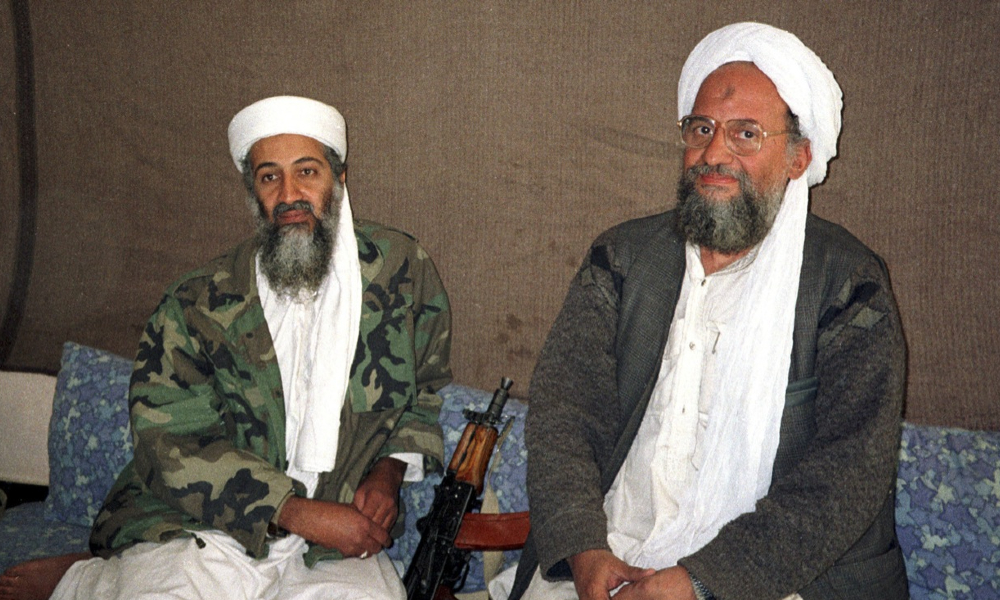
Al-Qaeda’s founding leader, Osama bin Laden, was formative for the movement for almost three decades. From his organization’s inception in the anti-Soviet war in Afghanistan in the 1980s, bin Laden helped transform the jihadist movement into a transnational network with global ambitions. His influence was derived in part from his bankroll, which he used to build training infrastructure and support myriad jihadist causes, but he also earned respect by eschewing a life of privilege for the cause. He advocated for targeting the far enemy—the United States—as the requisite first step toward destroying the international order, weakening and allowing the overthrow of regional regimes, and ushering in a caliphate. He then operationalized that vision with the 9/11 attacks. Though he lacked religious credentials, he was adept at using religious language to communicate his message in ways that had broader resonance. Evading the United States for a decade after 9/11 only increased his stature.
While bin Laden played a visible leadership role over time, Islamic State leader Abu Bakr al-Baghdadi emerged suddenly and limited his public profile. His only confirmed public appearance was at the Great Mosque of al-Nuri in Mosul, Iraq, where he delivered a sermon in July 2014 declaring the establishment of the Islamic State “caliphate.” He issued periodic audio statements and one video before his death in 2019. But his low profile only added to his mystique. While bin Laden claimed no religious authority, the Islamic State used Baghdadi’s lineage from Prophet Mohamed’s Quraysh tribe to legitimize its claim that he was caliph.
Baghdadi shaped the jihadist movement by steering it toward state-building, marking a departure from al-Qaeda’s focus on transnational attacks to achieve a caliphate in the more distant future. In so doing, he spurred the largest mobilization in the movement’s history and gained pledges from dozens of organizations.
Movement leaders have sometimes emerged from the affiliates. After the U.S. invasion of Iraq in 2003, Abu Musab al-Zarqawi pledged allegiance to bin Laden and led al-Qaeda’s first affiliate. But he also rose to become a movement leader through his instrumentalization of sectarianism and indiscriminate violence. Zarqawi gained so much stature within the movement that a senior al-Qaeda operative remarked that “had I known of all of Zarqawi’s activities and capabilities when he first came to al-Qaeda with a desire to pledge bayat to Osama bin Laden, I would have written a letter to bin Laden advising that the sheikh pledge bayat to Abu Musab instead.” In addition, Anwar al-Awlaki—though not the leader of al-Qaeda in the Arabian Peninsula—became a movement leader through his eloquent speeches, his religious credentials, and his ability to connect with both Arabic- and English-speaking audiences.
The Leadership Deficit
Al-Qaeda and the Islamic State’s rivalry still defines the jihadist movement, particularly through their affiliates. But the two groups’ current leadership offerings are truly uninspiring. In contrast to bin Laden, who masterminded 9/11, and Baghdadi, who declared a caliphate, the current leaders are thin on accomplishments and credibility.
For the past three years, al-Qaeda’s core organization has functioned without a declared leader. Informally, founding al-Qaeda member Sayf al-Adl functions as the de facto leader of the group. But he has not taken up the reins as a leader of the al-Qaeda network, as affiliates have not publicly pledged bayat to him nor has he accepted pledges. Even in this informal role, there is “increasing dissent and dissatisfaction with his leadership,” according to a UN report published in July 2025. Moreover, his public statements, even about the war in Gaza, have largely been ignored by everyone but counterterrorism analysts. Adl is also thought to be based in Iran, the government of which may place restrictions on his activities and is reviled by many within the jihadist movement.
Perhaps equally uninspiring is the Islamic State’s leader, Abu Hafs al-Hashimi al-Qurashi. He is the fifth leader of the group since its “caliphate” declaration. Since 2023, governments and analysts have debated his identity. In contrast to al-Qaeda, the Islamic State affiliates at least have an official, though faceless, leader to declare allegiance to, and they all have. But otherwise, Qurashi appears to be a figurehead without cachet. As a result, both groups—the self-proclaimed heads of the movement—lack a leader to capture the imagination of current and prospective adherents.
Another plausible alternative for movement leadership would be the emirs of the two victorious jihadist organizations: the Afghan Taliban’s Haibatullah Akhundzada and HTS’s Ahmed al-Sharaa. Al-Qaeda’s leaders and its affiliates have historically treated Taliban leaders with deference, and they have also sworn bayat to Akhundzada, as has the Pakistani Taliban. But since the Taliban’s takeover, Akhundzada has focused narrowly on ruling in Afghanistan and securing Taliban unity. Thus, while the Taliban’s victory provided a boost for al-Qaeda-aligned organizations, Akhundzada has not leveraged his influence to play a broader leadership role in the jihadist movement.
For his part, Sharaa has undertaken something akin to a “charm offensive” with the international community since taking control of Syria in December 2024. However, his public relations campaign has not been focused on movement leadership but rather on gaining international acceptance, even among governments viewed as enemies by many groups in the Sunni jihadist movement. Importantly, he severed his affiliation with al-Qaeda years prior to HTS’s takeover and has opted to distance himself and HTS from the jihadist milieu. Though Sharaa and HTS provide a road map for jihadist groups to win militarily and gain international legitimacy, that path has proved to be at odds with leading the jihadist movement, much of which rejects the international system and imposed borders that Sharaa’s government now accepts.
What Happened to Unifying Leaders?
The most straightforward explanation for the vacuum is the success of leadership decapitation. Bin Laden, Awlaki, Zarqawi, and Baghdadi all met their ends as the result of U.S. counterterrorism actions; in previous generations, Qutb was executed by the Egyptian government and Azzam died in a still unsolved killing in Pakistan. But decapitation alone does not explain the absence of new leadership, as new movement leaders emerged after previous decapitation efforts. And, given the celebration of martyrdom in the movement, death would not deter emerging leaders. Rather, this current gap has emerged from the lack of a galvanizing conflict for the cause and from the dichotomous effects of social media.
Azzam, bin Laden, Omar, Zarqawi, and al-Baghdadi rose to become movement leaders through their prominent roles in highly symbolic conflicts that mobilized supporters, attracted new recruits, and brought followers under the influence of a movement leader. With no holy wars in Afghanistan, Syria, or Iraq, there are no “destinations” for combat or even mobilization. Though the war in Gaza possesses the requisite ideological appeal, it lacks the access that the previous conflicts had. The conflicts in Africa, in contrast, are fairly accessible, but none has galvanized followers widely beyond the region.
During the previous lulls in mobilizing conflicts, jihadist groups were able to congregate in countries with sympathetic regimes, such as Sudan under Hassan al-Turabi or the first Taliban regime in Afghanistan. But HTS and the current Taliban regime have not had the same open-door policy, though both regimes have continued to welcome foreign fighters and groups that fought alongside them. In the absence of even places to assemble, jihadist groups are pursuing localized or regional objectives, with varying degrees of success. Gone are the leaders who effectively appealed to transnational objectives.
Second, and perhaps counterintuitively, the highly decentralized information environment means that anyone can use social media to convey their messages, but, at the same time, it is difficult to break through the noise. Social media has provided groups and adherents platforms to disseminate their messages instantly and widely while also allowing forums for connection. But the space has become so crowded with voices and spread across multiple platforms that no single voice has been able to garner attention. For now, the information environment has hindered the rise of a compelling movement leader.
The absence of a transformational jihadist movement leader is good news for counterterrorism. This deficit means the movement lacks individuals to inspire organizations and attract new followers. But while Sunni jihadism may have transitioned to a leaderless movement, if a leader could harness the powerful potential of social media or the mobilizing potential of the war in Gaza or another conflict, the jihadist movement would be transformed and possess the capability to be as dangerous than ever.