Zelensky Announces Government Overhaul
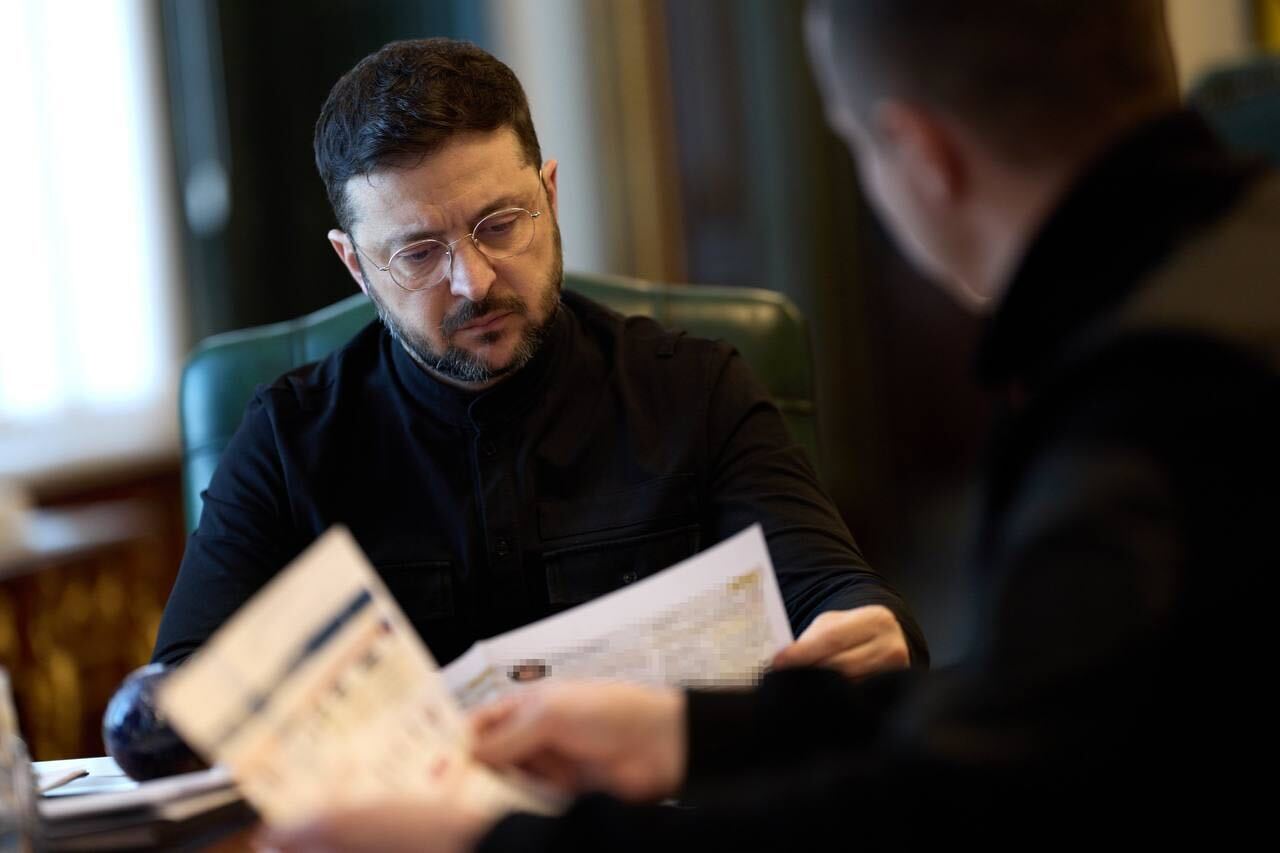

No one has taken the “new year, new me” mantra this year as seriously as President Volodymyr Zelensky of Ukraine, who announced “a substantial overhaul” of his government on Jan. 2.
Over the subsequent 72 hours, Zelensky appointed a new chief of staff, replaced the leadership of the special services—the internal security services—and appointed new ministers of defense and energy. He also pledged to overhaul the entire law enforcement system, starting with reforming the State Bureau of Investigation. Changes are coming even to the military, Zelensky said.
The government reshuffle is shaping up to be the most consequential in years, and with enough political will, it can result in long-overdue reforms that are critical to Ukraine’s defense.
The President’s Office
Zelensky’s new chief of staff is Ukraine’s former top spy, Kyrylo Budanov. He is replacing Andriy Yermak, once a close ally and personal friend of Zelensky, who was ousted back in November amid a corruption scandal.
Budanov was only 34 years old when he became head of Ukraine’s defense intelligence, known in Ukraine as HUR, in 2020. Since Russia’s full-scale invasion, the agency has stunned the world with several bold operations: helicopter raids to deliver supplies to the besieged Azovstal plant in Mariupol, maritime drone campaigns, and even operations against Russian mercenaries in Africa. Most recently, on Jan. 1, HUR announced that it faked the death of the commander of the Russian Volunteer Corps, a Russian unit fighting on Ukraine’s side, successfully claiming the $500,000 bounty placed on his head by Russia.
Budanov himself enjoys considerable political clout and is highly regarded by the international intelligence community. He has consistently ranked as one of the most trusted officials in the country, sharing the top three spots with Zelensky himself and Ukraine’s former top general, Valerii Zaluzhnyi. He is known to be more clear-eyed and pragmatic than the rest of the leadership about frontline dynamics; this is an important asset, since the fear of reporting bad news up the chain of command has been hindering Ukraine’s defense for years.
“Ukraine now needs to focus more on security issues, the development of Ukraine’s defense and security forces, and the diplomatic track in negotiations, and the Office of the President will serve to fulfill these tasks,” Zelensky said in a statement announcing Budanov’s appointment.
Yet for all of the accolades, Budanov is a notable pick for the job.
After the ouster of Yermak, Zelensky’s infamous former chief of staff who turned the president’s office into the most powerful institution in the country, there was hope that the office would return to its original function. After all, the office’s mandate is mainly administrative; its head is not supposed to exert hegemonic influence over the rest of the government, as Yermak had done. Ukraine actually has a constitutional office of prime minister. The chief of staff is not supposed to duplicate that function, much less is he or she supposed to supplant the prime ministerial office.
Although Budanov has a clean reputation and has reportedly been one of Yermak’s harshest critics, his appointment signals that the president’s office will likely remain the center of gravity of Ukrainian political power. It’s practically impossible that such a powerful and ambitious figure would have agreed to the job merely to shrink it back to its humbler origins.
This isn’t necessarily a bad thing in wartime. The question is whether that power will be used effectively, addressing many of Ukraine’s critical problems, like mobilization.
The Defense Ministry
The new minister of defense is Mykhailo Fedorov, formerly the digital transformation minister and first deputy prime minister. He will replace Denys Shmyhal, who agreed to head the Ministry of Energy instead.
The 34-year-old Fedorov is Ukraine’s best-known reformer. He has led the Ministry of Digital Transformation since 2019, surviving several government shakeups for more than six years. Under Fedorov’s leadership, the ministry launched Diia, the “state in a smartphone” app and website that provides digitized versions of official documents, including one’s passport, as well as dozens of services, from fine payments to online marriage.
Since 2022, Fedorov has focused on Ukraine’s war effort, helping to create UNITED24, the Ukrainian government’s official global fundraising platform. He has been especially interested in military technologies and drones, helping launch Brave 1, a government-backed defense tech incubator, and the Army of Drones, a drone procurement initiative. Here’s an interview Fedorov’s deputy, Georgii Dubynskyi, did with the Lawfare Podcast back in 2022:
Fedorov has reportedly sought the defense minister position for years. Just like Budanov, he is a popular figure who had a tense relationship with Zelensky’s former chief of staff, Yermak.
In picking Fedorov for defense minister now, Zelensky is banking on defense innovation and drone warfare to ensure a sustainable Ukrainian defense in the future.
“Ukraine is fully committed to diplomacy and seeks to end this war as soon as possible. However, Russia is not demonstrating a similar approach and is prolonging its aggression. We will counter this through greater technological advancement and transformation of the defense sector,” Zelensky said on Jan. 5 after a meeting with Fedorov.
“Russia has one significant advantage in this war, namely the ability to exert pressure through the scale of its strikes …. We must respond with more active use of technology, faster development of new types of weapons, and new tactics,” Zelensky added.
The Security Apparatus
Zelensky’s reshuffle has brought significant shifts to Ukraine’s security apparatus as well.
With Budanov becoming chief of staff, the new head of defense intelligence is now Lt. Gen. Oleh Ivashchenko, the former head of the foreign intelligence service. Ivashchenko’s successor is yet to be named.
The most controversial move of the entire reshuffle was the dismissal of Vasyl Maliuk, a widely respected head of Ukraine’s security service, the SBU, who oversaw historic operations such as the bombing of Crimea’s Kerch bridge and Operation SpiderWeb—the spectacular operation in which fleets of drones attacked Russian planes on the ground at multiple locations inside of Russia. After rumors of his dismissal leaked to the media, many commanders and activists expressed public support for Maliuk, urging Zelensky not to fire him.
Zelensky didn’t explain his decision, only saying that Maliuk will stay in the security service to focus on special operations against Russia. He is at least temporarily replaced by the head of the SBU’s Alpha special operations unit, Yevhen Khmara, who is now the acting head of SBU.
More leadership changes took place at the State Border Guard Service, whose former head, Serhii Deineko, became adviser to the interior minister and was replaced by his first deputy, Valerii Vavryniuk.
Other Changes and Reforms
A career diplomat, Serhiy Kyslytsya, who is part of Ukraine’s negotiating team, was appointed Budanov’s deputy, the first deputy head of the president’s office.
Zelensky also had a surprising meeting with Ukraine’s former minister of foreign affairs, Dmytro Kuleba, who was fired amid another government reshuffle in 2024, against the backdrop of Yermak’s efforts to consolidate influence over Ukraine’s foreign policy. Kuleba wasn’t appointed to any post, but Zelensky said the former diplomat was “part of the Ukrainian team,” and that the two have agreed to think about future cooperation.
Former Defense Minister Denys Shmyhal is the energy minister, a position that has been vacant for more than a month after the previous minister was incriminated in the energy corruption scandal. Shmyhal is a seasoned bureaucrat and formerly the longest-serving prime minister in Ukraine’s history. He has some experience in the energy sector, having been the director of one of Ukraine’s biggest thermal power plants in 2017-2018.
The new justice minister, a position that was also left vacant as a result of the same scandal back in November, is the chair of the parliamentary committee on legal policy, Denys Maslov.
The president also tasked officials with preparing a draft law for the reform of the State Bureau of Investigation, Ukraine’s FBI-wannabe investigative organization. The bureau was created after the Euromaidan to investigate crimes by top officials, judges, and law enforcement officers but has since been plagued by corruption and inefficiency itself, according to its critics. Reforming the bureau is now one of the European Union’s demands in Ukraine’s EU accession talks.
During a briefing on Jan. 3, Zelensky also said there will be leadership changes at all law enforcement agencies.
“And then … we will, as it were, go towards the army, the Armed Forces of Ukraine,” he said, hinting at looming changes in the military.