The Administration’s Drug Boat Strikes Are Crimes Against Humanity
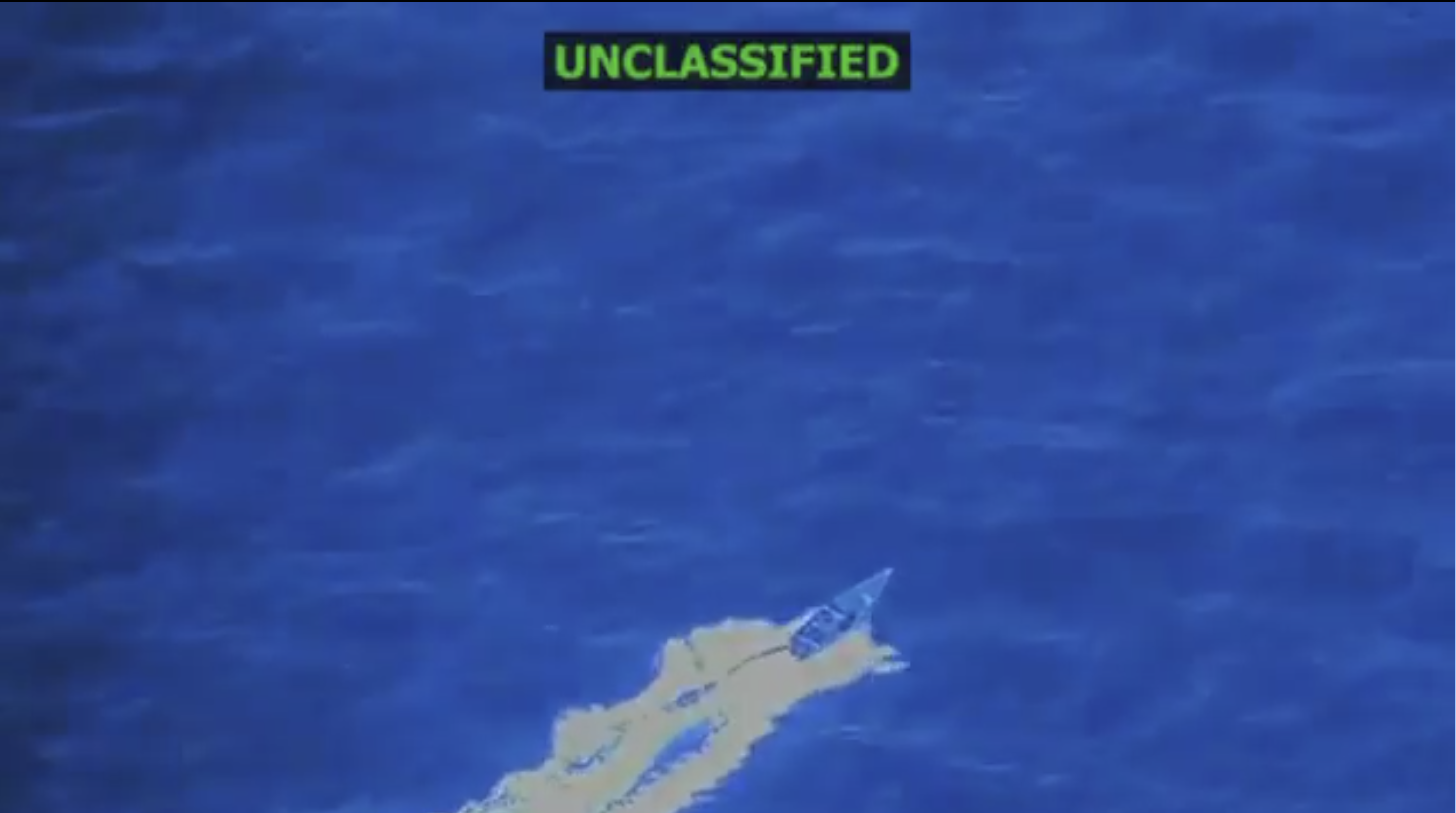

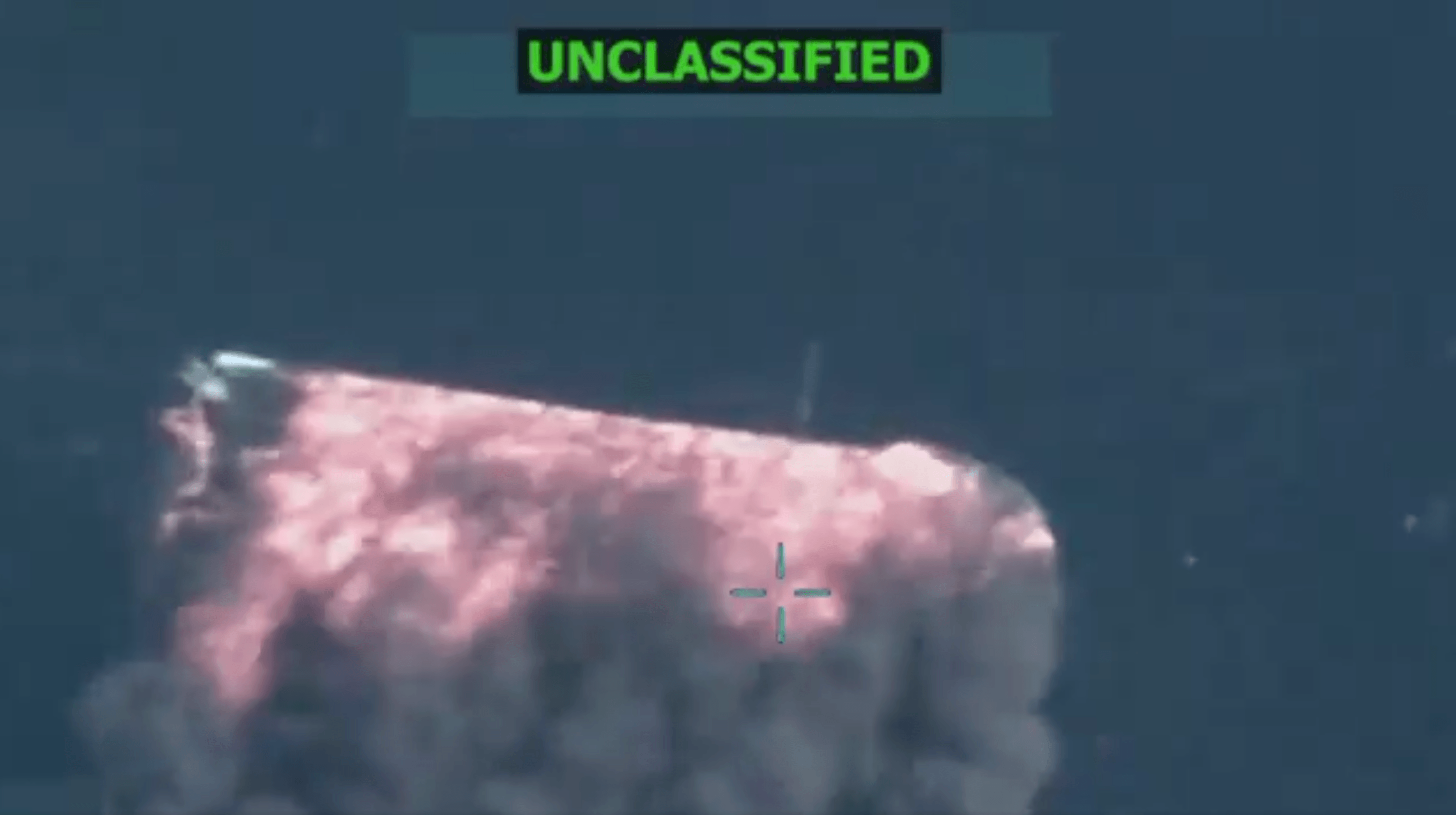
The U.S. strikes against alleged drug boats have generated significant concern among international law scholars, Congress, and the public. On Nov. 29, Sen. Ed Markey (D-Mass.) called Secretary of Defense Pete Hegseth a “war criminal” and stated he should be “fired immediately.” To date, the Department of Defense has launched 25 strikes, reportedly killing 95 individuals. In the first strike, on Sept. 2, 2025, U.S. special forces carried out a second attack to kill two shipwrecked survivors.
Members of Congress and the media have portrayed these strikes, and particularly the Sept. 2 strike, as potential war crimes. Although a majority of international law experts agree that the strikes are unlawful, experts have emphasized that these strikes are not war crimes, which can only be committed in the context of an armed conflict. There is no colorable argument that an armed conflict exists with either Venezuela or the Tren de Aragua drug cartel. Rather, the drug strikes constitute murder under U.S. domestic law and extrajudicial killings under international human rights law.
The strikes likely also constitute crimes against humanity under international criminal law, as Luis Moreno Ocampo, who served as the International Criminal Court’s (ICC) first chief prosecutor, concluded in early November. This would expose Trump administration officials and service members complicit in the attacks to heightened legal exposure in foreign courts and international tribunals. There is also precedent for prosecuting the systematic killing of drug traffickers by government officials as a crime against humanity, with the recent arrest of Rodrigo Duterte, former president of the Philippines, by the ICC.
Crimes Against Humanity
There is no single, stand-alone treaty on crimes against humanity, though the UN General Assembly has commenced a process for negotiating one. In the meantime, we can look to the definition of crimes against humanity in the Rome Statute of the ICC. The U.S. is not party to the Rome Statute, but its definition of crimes against humanity is generally considered to reflect customary international law, has been incorporated into many countries’ domestic law, and is included in the General Assembly’s draft treaty on crimes against humanity.
Crimes against humanity entail certain offenses (such as murder, torture, and enforced disappearances) committed as part of a “widespread or systematic attack directed against any civilian population.” The Rome Statute further specifies that such an attack be carried out “in furtherance of a State or organizational policy to commit such an attack” (Article 7(2)).
The ICC’s charges against Duterte provide a useful analog for assessing the international criminality of the drug boat strikes. The ICC arrested Duterte earlier this year for substantially similar conduct. The ICC’s Office of the Prosecutor alleges that Duterte is responsible for crimes against humanity arising from the extrajudicial killing of drug traffickers in the Philippines by the Davao Death Squad and law enforcement personnel. The warrant’s central allegation is that “DUTERTE and his co-perpetrators shared a common plan or agreement to ‘neutralise’ alleged criminals in the Philippines (including those perceived or alleged to be associated with drug use, sale or production) through violent crimes including murder.” The ICC Pre-Trial Chamber approved the arrest warrant in March 2025, finding that there are “reasonable grounds to believe that Mr Duterte is individually responsible for the crime against humanity of murder.” Duterte was arrested in March and has since been in ICC custody, awaiting trial for three counts of crimes against humanity.
The Elements of Crimes Against Humanity
Crimes against humanity include enumerated offenses like murder, which are called constituent offenses, committed in either a widespread or systematic attack against a civilian population. There is general agreement among legal experts that the administration has committed numerous acts of murder against suspected drug traffickers. The individuals targeted are not combatants in armed conflict but are civilians under the protection of international human rights law. The fact that they may belong to a group (Tren de Aragua) that has been designated as a foreign terrorist organization does not alter their civilian status, nor does it give the government any authority to target them with lethal force. As civilians, suspected drug runners can be targeted by government officials with lethal force only under limited circumstances, such as individual self-defense or the defense of others against an imminent threat of death or serious injury. No evidence exists that any of the 95 persons killed in these attacks posed an imminent risk to anyone. To the contrary, there is reporting that at least one boat had turned away from the United States before it was attacked. Similarly, as other experts have noted, there is no legal justification for asserting a right of national self-defense against the drug runners. Under Article 51 of the UN Charter, states can use force in national self-defense only pursuant to an “armed attack.” Trafficking drugs does not constitute an armed attack, which is generally understood to entail unlawful force of a certain gravity or other conduct (such as cyber operations) that directly causes comparable physical damage or destruction.
The ICC’s arrest warrant for Duterte similarly identifies the “murders of persons allegedly involved in various forms of criminal activities, including drug-related ones” as the constituent offenses for the crimes against humanity charge. In particular, it states that “at least 19 persons, allegedly drug pushers or thieves, were killed by members of the [Davao Death Squad] in various locations around Davao City” and that “at least 24 persons, allegedly criminals – such as drug pushers and thieves – or drug users, were killed by or under the supervision of members of the Philippines’ law enforcement.”
Turning to the contextual elements of crimes against humanity in the boat strikes, there is a clear governmental policy to attack these drug runners. The administration has repeatedly and publicly espoused this policy. On Oct. 23, for example, President Donald Trump said: “I think we’re just going to kill people that are bringing drugs into our country.” Around two weeks later, Secretary Pete Hegseth posted on X that the Defense Department will “find and terminate EVERY vessel with the intention of trafficking drugs to America to poison our citizens.” The Pentagon spokesperson affirmed the policy on Dec. 2, saying, “When it comes to killing narco-terrorists, we have only just begun.” Meanwhile, President Trump has expressed a desire to expand the lethal strikes, indicating the administration may start targeting suspected drug traffickers on land “very soon.”
The fact that the administration’s strikes may be intended to promote a legitimate government objective, reducing the flow of drugs into the United States, does not alter the crimes against humanity analysis. The ICC arrest warrant against Duterte similarly noted that the government of the Philippines’ policy was aimed at “putting an end to the criminality in the Philippines by all means, including killing of alleged criminals.” It is the existence of a policy to attack civilians—rather than the overarching objectives of such policy—that is relevant to culpability for crimes against humanity.
The administration’s attacks are also directed against a “civilian population.” This element is intended, in part, to exclude attacks that comply with the law of armed conflict, which is not applicable here. The ICC has indicated that while “a limited and randomly selected group of individuals” does not constitute a civilian population, there is no requirement that the civilians share “a common nationality, ethnicity, or other similar distinguishing features.” The civilians targeted in these strikes were not randomly selected. They clearly share a common profile. The ICC similarly concluded that killing drug dealers constituted an attack against a “civilian population” in its decision to approve the arrest warrant for Duterte.
The next question is whether the strikes constitute a “widespread or systematic” attack. This requirement is disjunctive, meaning that the attack must be either widespread or systematic. The ICC has interpreted “widespread” to refer to the “large-scale nature of the attack and the number of targeted persons.” The term “systematic” reflects “the organized nature of the violent acts, referring often to the existence of ‘patterns of crimes’ and the improbability of their random or accidental occurrence.”
The Trump administration’s drug strikes could potentially be considered “widespread,” particularly if they continue. The Pentagon has already conducted 25 different strikes between September and December 2025, killing 95 people. Still, the number of victims is relatively small compared to other prosecutions for crimes against humanity. (Duterte, for example, was accused of carrying out an attack over “several years” that killed “thousands of people.”) There is a stronger argument that the boat strikes are “systematic.” In explaining the systematic nature of Duterte’s alleged crimes, the ICC’s Pre-Trial Chamber noted that the “killings shared common features, such as the location and modus operandi, including the method of killing, the profiles of victims, and the profiles of perpetrators.” The U.S. attacks against drug ships similarly have a clear pattern. The Defense Department is specifically targeting suspected drug boats from Venezuela and Colombia in the Caribbean and eastern Pacific, primarily using MQ-9 Reaper drones with Hellfire missiles. These are not random attacks. They are carried out in an organized manner, pursuant to a clear policy, as directed by the president.
Legal Risk for Perpetrators of Crimes Against Humanity
The systematic nature of the murders committed by U.S. forces against drug runners makes these acts an offense under international criminal law. The international criminal law character of these crimes further increases the legal risk for those involved in the commission of the crimes. U.S. officials who order, induce, aid, or carry out these attacks may be exposed to criminal liability, both domestically and abroad. As others have written about potential accountability in U.S. courts (and the obstacles to any such prosecutions), I will briefly outline two scenarios in which U.S. officials could be prosecuted outside the United States. Under both scenarios, the administration’s eagerness to publicize its unlawful conduct, including the identities of the U.S. commanders involved, would facilitate accountability efforts.
The first scenario is an ICC prosecution. Although the U.S. is not a party to the ICC, the court would have jurisdiction over crimes committed by U.S. nationals on the territory of a state party or, “if the crime was committed on board a vessel or aircraft, the State of registration of that vessel or aircraft” (ICC Statute Article 12). It is not known whether any of the drug boats were flagged, but Venezuela (at least for now) and Colombia are parties to the ICC. Any attacks on land, as Trump suggested may occur, could also trigger ICC jurisdiction since every South American country is party to the ICC. Although the ICC would face significant challenges executing an arrest warrant against U.S. nationals within the United States, the 125 states parties to the ICC would have an obligation to cooperate in executing an arrest warrant within their territory. An ICC prosecution could include senior-level administration officials, as the ICC does not recognize official immunities, including head of state immunities, for crimes within the jurisdiction of the court pursuant to Article 27 of the Rome Statute. The ICC prosecutor has issued arrest warrants in the past three years for Russian President Vladimir Putin and Israeli Prime Minister Benjamin Netanyahu, even though neither Russia nor Israel is a party to the Rome Statute. There is no indication that the ICC presently intends to investigate the drug boat strikes, and it would face significant obstacles if it attempts to do so. Nevertheless, this scenario remains a possibility, especially if the strikes continue and pressure grows on the ICC to take action.
The second scenario would be prosecution in a foreign state’s judicial system. States can exercise universal jurisdiction over international crimes, including crimes against humanity. This means a state may charge foreign perpetrators of international crimes committed outside its territory. U.S. officials subject to foreign prosecution could argue that they are entitled to immunity for official acts, also called “immunity ratione materiae,” as they were acting on behalf of the U.S. government in carrying out these strikes. States, however, are increasingly skeptical of official acts immunity for international crimes. The UN’s International Law Commission (ILC), a body of international law experts charged with codifying and progressively developing international law, has concluded that immunity for official acts does not apply with respect to such crimes, including crimes against humanity.
Numerous states have supported the ILC’s approach. For example, the Nordic countries stated, “In our view, no rules of immunity should apply in national jurisdictions for the gravest international crimes, and it is important that genocide, crimes against humanity and war crimes are included in the enumeration.” This exception to official acts immunity in foreign domestic courts does not apply to head of state immunity, also called “immunity ratione personae.” President Trump would thus continue to have head of state immunity in foreign courts, but not the ICC, under customary international law for the remainder of his term.
Many Americans are rightfully concerned about the administration’s drug boat strikes. Those involved in these strikes should similarly be concerned. Although the media has mischaracterized these strikes as war crimes, they are nevertheless crimes under international law. U.S. officials involved in these strikes should understand that committing international crimes exposes them to liability, both in the United States and in foreign and international courts. The Trump administration’s recent threats to issue new sanctions against the ICC if it investigates U.S. personnel demonstrates that the administration is aware of this risk, even if not deterred by it.